

Start With the Existing Structure
Before choosing new finishes, evaluate what can realistically be updated.
Important areas to inspect include:
- Stringers
- Treads
- Risers
- Handrails
- Balusters
- Landing areas
Many staircases can be transformed by replacing visible components while keeping the underlying structure intact, which often simplifies the renovation process.
Open Up the Visual Space
One of the strongest modern trends is creating a lighter, more open staircase.
Popular approaches include:
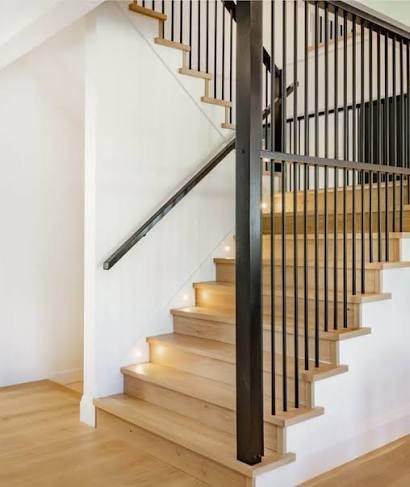
- Slim metal balusters
- Horizontal railings
- Glass panels
- Open risers where appropriate
- Minimalist handrails
Reducing bulky visual elements allows natural light to move more freely through the home and makes adjacent rooms feel larger.
An insider tip many designers recommend is using fewer but stronger vertical elements rather than closely spaced decorative spindles. The staircase often appears cleaner and more contemporary.
Upgrade the Treads and Risers
New treads can completely change the character of a staircase.
Popular materials include:
- Solid hardwood
- Engineered wood
- White oak
- Walnut
- Stained maple
For a modern look, many homeowners choose wood treads paired with painted risers, often in soft white or light neutral tones. This combination creates contrast while keeping the staircase visually light.
Choose a Simple Railing Design
Modern railings emphasize clean lines over ornate detailing.
Common choices include:
- Matte black metal
- Brushed stainless steel
- Natural wood handrails
- Glass infill panels
- Minimal square profiles
One practical observation from many renovation projects is that simpler railings tend to remain stylish much longer than highly decorative designs. They also collect less dust and are easier to maintain.
Improve Staircase Lighting
Lighting is often the feature that makes a remodeled staircase feel truly finished.
Effective options include:
- Recessed wall lights
- LED strip lighting under treads
- Pendant fixtures above stairwells
- Skylights where possible
- Motion-activated lighting
Good lighting enhances safety while highlighting the architectural details of the staircase.
An insider tip is to place lighting so it washes across the treads rather than shining directly into the eyes of someone using the stairs. The effect is both safer and more elegant.
Coordinate Flooring and Stair Finishes
A staircase should connect naturally with the surrounding flooring.
If the adjacent rooms feature wood or wood-look flooring, continuing a similar tone on the stairs often creates a seamless transition between levels.
Homeowners planning broader interior updates often explore resources such as this guide on kitchen renovation contractor tampa fl, where coordinated material selections help create consistent, well-connected living spaces throughout the home.
Add Storage Where Possible
Modern remodeling often looks for opportunities to make the staircase more functional.
Potential storage solutions include:
- Under-stair cabinetry
- Pull-out drawers
- Open shelving
- Hidden closets
- Bench seating with storage
Even small storage additions can make a noticeable difference in homes where space is limited.
Consider Color Carefully
Color plays a major role in how a staircase feels.
Current trends favor:
- Warm whites
- Soft greiges
- Natural wood tones
- Matte black accents
- Light oak finishes
Avoid using too many contrasting colors on the staircase itself. A restrained palette usually creates a more sophisticated result.
One practical lesson from renovation projects is that slightly warmer whites often look better on risers than bright pure white, especially in homes with warm flooring or wood trim.
Maintain Comfortable Proportions
When altering stair components, keep comfort in mind.
Pay attention to:
- Tread depth
- Riser height
- Handrail grip size
- Landing dimensions
- Headroom clearance
Modern design should never compromise safe, comfortable daily use.
Avoid Common Staircase Remodeling Mistakes
Even carefully planned renovations can fall short if important details are overlooked.
Focusing Only on Appearance
Safety, comfort, and durability are just as important as style.
Ignoring Lighting
Poor lighting can undermine an otherwise beautiful staircase.
Mixing Too Many Materials
Limiting the number of finishes creates a cleaner modern look.
Forgetting Adjacent Spaces
The staircase should feel connected to the surrounding rooms.
Choosing Trendy Details
Timeless materials usually provide greater long-term satisfaction.
Think About the Entire Entry Experience
In many homes, the staircase is visible from the front door.
This means it contributes to the overall first impression of the interior. Coordinating the staircase with nearby flooring, lighting, wall colors, and architectural details helps create a welcoming and cohesive entry experience.
Rather than treating the staircase as a separate project, consider how it supports the broader design of the home.
Conclusion
Modern staircase remodeling is about creating a space that feels lighter, cleaner, and more functional while respecting the home’s architecture. By updating railings, treads, lighting, and surrounding finishes with a restrained and coordinated approach, homeowners can dramatically improve the appearance of their interior without major structural changes.