

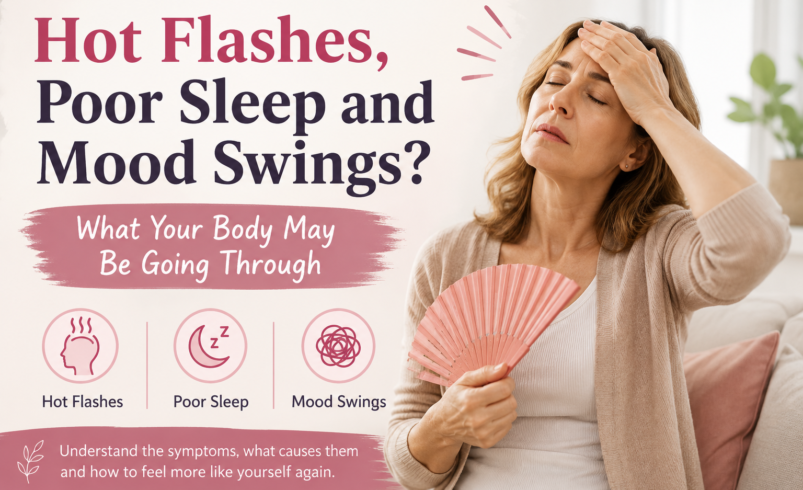

You wake up in the middle of the night feeling strangely warm.
You throw the blanket off.
A few minutes later, you’re cold again.
Then you look at the clock and realise you have another three hours before the alarm goes off.
If this has started happening more often, and you’re also noticing mood changes, irregular periods or a level of tiredness that doesn’t feel like your usual tiredness, you may be wondering what’s going on.
For many women, these changes can happen during perimenopause and menopause.
And honestly, it can be a confusing time.
Your Body Can Start Doing Things You Didn’t Expect
Maybe your periods were predictable for years.
Then suddenly, they’re not.
One month is early. The next one is late. The flow changes. You might skip a month altogether.
At the same time, you start noticing other little things.
You’re warmer at night. You’re sleeping differently. You’re more tired during the day. Your mood seems to change without much warning.
These changes can happen as hormone levels fluctuate during perimenopause. It isn’t always a smooth or predictable process, which is why some women feel completely fine one week and very different the next.
Hot Flashes Don’t Always Happen at Convenient Times
There is no perfect moment for a hot flash.
It can happen while you’re working, having dinner, watching TV or trying to have a normal conversation.
Suddenly, you feel heat moving across your face, neck or upper body. You may start sweating and then feel uncomfortable once it passes.
Night sweats can be particularly annoying because they don’t just make you uncomfortable. They can wake you up.
And once you’re awake, falling asleep again isn’t always easy.
Keeping the bedroom cool, choosing breathable nightwear and using lighter bedding can make nights a little easier. It may also help to notice whether things like alcohol, caffeine or spicy foods seem to make your symptoms worse.
Poor Sleep Can Change Your Whole Day
One bad night’s sleep is manageable.
Several in a row? That’s different.
You wake up tired. Your concentration isn’t great. You’re reaching for another cup of coffee before lunch. And small things seem much more irritating than they normally would.
If hot flashes are waking you up regularly, the sleep problem may be easier to understand. But stress and changing hormones can also affect sleep during this stage.
Try giving yourself a little more time to wind down before bed. Put the phone away. Keep your bedroom comfortable. Try to wake up around the same time each morning.
None of this is a magic solution.
But sometimes the boring basics are worth getting right.
And Yes, Your Mood Can Feel Different
You may find yourself getting annoyed more quickly.
Or suddenly feeling emotional.
Or simply feeling unlike yourself.
Mood changes can happen during perimenopause and menopause, but it’s important to remember that hormones aren’t the only possible reason.
Imagine trying to get through your day after sleeping badly for two weeks. Add work pressure, family responsibilities and everything else going on in your life.
Of course you’re going to feel different.
That doesn’t mean every emotional change should be blamed on menopause. It just means there can be several things happening at once.
Food Deserves Some Attention Too
When you’re busy, eating properly can become surprisingly difficult.
Breakfast is skipped because you’re late.
Lunch happens at your desk.
Dinner is whatever takes the least amount of effort.
Sound familiar?
During menopause, it’s worth paying attention to getting a good variety of foods. Protein, vegetables, fruits, whole grains, nuts, seeds and sources of calcium and vitamin D can all have a place in a balanced diet.
Some women also consider a women health gummy as an easy way to add certain nutrients to their routine.
But supplements shouldn’t replace meals. If you decide to use one, check the ingredients and serving size first, especially if you’re already taking other vitamins or medication.
Are Menopause Gummies Worth Considering?
There are now plenty of supplements marketed specifically toward women going through menopause.
Menopause gummies are one option, particularly for people who don’t enjoy swallowing tablets.
The format is convenient, but convenience shouldn’t be the only thing you look at.
Turn the bottle around.
Read the label. See what’s actually in it. Check the serving size and consider whether you’re already getting the same nutrients from another supplement.
And if you have an existing health condition or take medication, talk to a healthcare professional before adding something new to your routine.
Perimenopause Can Feel Like a Guessing Game
This stage can be especially confusing because symptoms don’t always follow a pattern.
You might feel completely normal for a while and then suddenly have a week where sleep, periods and mood all seem different.
That’s often when people start searching for answers online and come across everything from diet plans to perimenopause gummies.
It’s fine to explore your options, but don’t assume that one product can solve every symptom. What you need depends on what’s actually causing your symptoms and your overall health.
Sometimes a conversation with a doctor is far more useful than another hour of scrolling through product reviews.
Don’t Stop Moving
Exercise doesn’t have to become another item on your already-long to-do list.
Walk when you can.
Stretch in the morning.
Go swimming.
Dance around the house.
Take the stairs.
Whatever feels realistic.
Regular movement is good for overall health, and finding something you actually enjoy makes it much easier to keep doing.
You don’t need to become a completely different person just because you’re going through a different stage of life.
Know When Something Needs Attention
Menopause is a normal part of ageing, but that doesn’t mean every symptom should simply be ignored.
If hot flashes are constant, sleep problems are becoming overwhelming, your mood is affecting everyday life, or something about your periods feels unusual, speak with a healthcare professional.
There are different ways to manage menopause symptoms, and the right approach can depend on your age, health history and what you’re experiencing.
Also, don’t assume every symptom is menopause.
Sometimes there is another explanation, and getting that checked is important.
Your Body Isn’t Working Against You
The strange thing about menopause is that the changes can make you feel like you don’t quite recognise your own routine anymore.
The woman who used to sleep through the night is suddenly awake at 3 a.m.
The person who never used to feel particularly warm is carrying a fan everywhere.
And the things that never bothered you suddenly seem to bother you a lot.
It can be frustrating.
But your body isn’t failing you.
It’s going through a transition.
Pay attention to what it’s telling you, make the changes that genuinely help, and don’t be afraid to ask for professional support when you need it.
You don’t have to figure everything out in one day.