

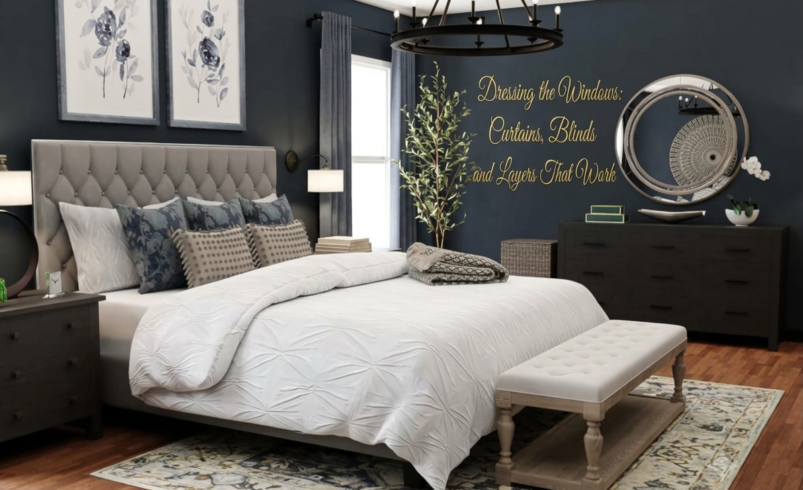

Windows are the largest openings in a room, and what hangs over them changes the feel of everything else. The right treatment makes a ceiling look taller, softens echoing walls, keeps out summer glare and gives privacy at night. The wrong one leaves a room looking short, cluttered or cold. Window treatments do three jobs at once: control light, control heat and finish the room. Here is how to plan them well.
Start With What the Window Must Do
Before looking at fabrics, decide the job. Does the room need darkness for sleep, filtered light for a workspace, privacy from a neighbouring building, or protection from afternoon heat? A bedroom facing east may need a blackout layer for early sun. A living room facing west needs heat and glare control. A kitchen window needs something that tolerates steam and splashes. Write the purpose against each window, because one answer rarely fits every room.
Measure Before You Choose
Poor measuring spoils good fabric. Measure the window width, the height from the rod position to the floor, and the wall space on both sides. Decide on the style first, because the measurements differ for curtains, blinds and shutters. Curtains look best when the rod is mounted high, close to the ceiling or just below the beam, and extends 20 to 30 cm beyond the window on each side. This makes the window look larger and lets the curtain stack back off the glass, so full daylight is available when drawn open.
Choose the Right Length
Curtains that hover a few centimetres above the floor look tidy and are easy to clean. Curtains that just kiss the floor look elegant in formal rooms. Curtains that pool on the ground look dramatic, but collect dust and get in the way of children and pets. Short curtains that stop at the sill suit kitchens and rooms where furniture sits beneath the window. Avoid curtains that stop halfway between the sill and the floor, since they look like a mistake.
Fullness Makes the Difference
Thin, flat curtains look cheap even when the fabric is expensive. For a rich fall, the fabric width should be about two to two and a half times the width of the rod. Heading styles shape the look: pleated headings give a tailored feel, wave headings give a clean modern ripple, and eyelets are casual and easy to slide but show less depth. Ask to see a sample hung with the correct fullness, not a flat swatch.
Layer for Flexibility
The most useful arrangement is two layers on a double rod or track. A sheer or semi-sheer layer closest to the glass diffuses sunlight and gives daytime privacy. A heavier layer in front closes for darkness, insulation and drama. This lets you shift a room from bright to calm without changing anything else. If you can afford only one improvement to a living room window, add the second layer.
Match Fabric to the Room
- Linen and linen blends: soft, relaxed and breathable, but they crease and can fade in strong sun.
- Cotton: easy to clean and affordable, suitable for family rooms.
- Velvet: heavy and luxurious, good for bedrooms and formal living rooms, but warm and dusty in hot months.
- Polyester blends: hold shape, resist fading and wash easily, a practical choice for sunny windows.
- Blackout-lined fabrics: essential in bedrooms and media rooms.
- Sheers and voiles: diffuse light and add softness, though they offer little privacy at night.
In dusty parts of NCR, tightly woven, washable fabrics are easier to keep fresh, and curtains that can be removed easily make cleaning less of a chore.
Consider Blinds and Shades
Roller blinds are clean and compact, suiting kitchens, study rooms and modern spaces. Roman blinds fold into soft pleats and add warmth to small windows. Venetian or wooden blinds control light direction precisely, and are popular in offices and home studies. Zebra or dual-layer blinds alternate sheer and solid bands, letting you adjust light without lifting the blind. Choose moisture-friendly materials for kitchens and bathrooms. Blinds work well alone, or underneath curtains to add privacy and light control.
Control Heat and Glare
In Gurgaon’s hot summers, windows are where heat enters. Light-coloured linings reflect sun, and thermal or blackout linings add insulation. Outdoor shading, such as awnings or louvres, is more effective than anything hung inside, if the building allows it. For west-facing windows, a combination of sheer curtain, lined curtain and a solar-control film on the glass can reduce heat noticeably. In winter, heavier fabrics keep warmth in and cold draughts out.
Think About Colour and Pattern
Curtains in a colour close to the wall make the room feel taller and calmer, because the eye reads the window and wall as one. A contrasting colour makes the window a feature. Plain fabrics suit busy rooms, and patterned fabrics bring character to quiet ones. Vertical stripes add height, and large patterns suit big windows. Test the fabric in the room’s own light, as colours shift between shop and home. Choose curtains that connect with something else in the room, such as a cushion, a rug or a piece of art.
Hardware Deserves Attention
Rods, tracks, brackets and finials are part of the look. Slim metal rods suit contemporary rooms, and wooden poles with finials suit classic spaces. Ceiling-mounted tracks give a clean line and handle wide windows or curves. Check that the wall can hold the weight, especially for heavy lined curtains, and use proper fixings. Motorised systems add convenience for tall windows and large panels, but plan power points and wiring before walls are painted.
Special Windows and Spaces
Large sliding doors to a balcony need curtains that clear the track and stack beside the door. Corner windows work with two separate rods or a corner track. Narrow windows can be dressed with a single panel on a side-pulled rod. Bay windows suit blinds or a curved track. In bathrooms, use moisture-resistant blinds or frosted films, and avoid heavy fabric near showers.
Care and Maintenance
Follow the fabric’s cleaning instructions, and vacuum curtains gently with a brush attachment to remove dust. Wash or dry-clean according to the label, and check for shrinkage. Rotate or air curtains in the monsoon to avoid mildew. Replace blinds that sag or jam, and wipe tracks occasionally so they slide smoothly.
Working With a Design Professional
A good residential interior designer Gurgaon families rely on will measure every window, bring physical samples and explain the trade-offs between fabric, heat and privacy. When you read examples from an interior designer gurgaon that discuss current design directions, notice how window treatments tie into colour, light and furniture, instead of being treated as an afterthought.
In a home renovation Gurgaon project, decide curtain and blind positions early. Ceiling recesses for curtain tracks, power points for motors and wall brackets need to be planned before the false ceiling and paint are finished.
Quick Questions
How high should I hang curtains?
Close to the ceiling or at least a hand-width above the window frame, to make the room feel taller.
Do I need both curtains and blinds?
Not always, but the combination gives the most control over light and privacy.
What colour curtains make a room look bigger?
Light colours close to the wall tone, hung high and wide, usually work best.
Before You Order
Photograph each window at morning, noon and evening, measure carefully, and note whether each needs privacy, darkness or heat control. Bring those notes to your fabric selection. Chalk Studio works across Gurgaon’s apartments, builder floors and villas, and a window-by-window list like this is a useful thing to bring to a first consultation with any studio, including this one.