
Introduction
Managing waste efficiently is important for homeowners, contractors, landscapers, and waste removal businesses. Large cleanup projects often generate more debris than standard garbage containers can accommodate, making a portable dumpster trailer a practical option for collecting and transporting waste.
A portable dumpster trailer combines the convenience of a movable waste container with the hauling capabilities of a trailer. Depending on its design, it may feature a hydraulic dumping mechanism, a detachable container, or an open-top body for loading bulky materials.
These trailers are useful for home renovations, construction debris removal, landscaping, roofing projects, and commercial cleanup operations. Choosing the right model requires careful consideration of capacity, towing requirements, loading methods, rental costs, and the type of material being transported.
What Is a Portable Dumpster Trailer?
A portable dumpster trailer is a trailer-mounted waste container designed to collect, transport, and, in some configurations, unload debris. Unlike a stationary dumpster, it can be moved between approved locations using a compatible towing vehicle.
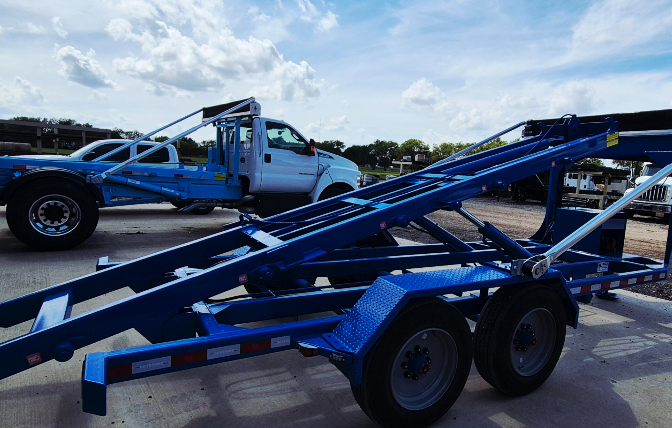
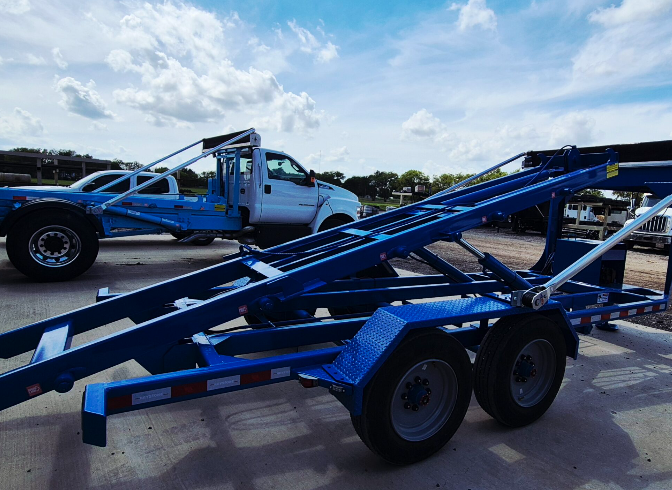
Portable dumpster trailers come in several configurations. Some use hydraulic systems to raise the trailer bed and discharge its contents, while others carry detachable containers that can be loaded and unloaded independently of the trailer chassis.
The best trailer design depends on whether the primary requirement is temporary waste storage, frequent hauling, or efficient container exchange between job sites.
Common Types of Portable Dumpster Trailers
Hydraulic Dump Trailers
Hydraulic dump trailers feature a powered lifting mechanism that raises the trailer bed to discharge suitable materials. They are commonly used for landscaping debris, construction waste, gravel, and general hauling, subject to the manufacturer’s specifications.
These trailers can be useful for contractors who need to transport and unload materials frequently.
Roll-Off Dumpster Trailers
Roll-off trailer systems transport detachable waste containers. Depending on the design, the trailer can deposit a container at a job site and retrieve it later, allowing the towing vehicle to serve multiple locations.
This configuration can benefit waste removal businesses and contractors managing several cleanup projects.
Enclosed Dump Trailers
Enclosed or covered dump trailers provide additional containment for suitable materials. Depending on their design, they may help protect cargo from weather and reduce exposure during transportation.
Customers should verify ventilation, loading access, payload capacity, and material restrictions before choosing an enclosed configuration.
Portable Dumpster Trailer Sizes and Capacity
Selecting the right size helps ensure that a trailer can accommodate the expected waste without exceeding its weight rating.
Trailer capacity is often described in cubic yards, while payload is measured in pounds or kilograms. These measurements represent different limits: a container may have sufficient volume but still exceed its allowable payload when loaded with heavy debris.
Common Trailer Sizes
| Approximate dimensions | Illustrative volume | Typical applications |
|---|---|---|
| 5 × 8 feet | 2–4 cubic yards | Small cleanouts and light landscaping |
| 6 × 10 feet | 3–5 cubic yards | Household projects and minor renovations |
| 6 × 12 feet | 4–7 cubic yards | Medium cleanouts and contractor use |
| 7 × 14 feet | 6–10 cubic yards | Larger cleanup and construction projects |
| Commercial roll-off system | Varies by container | Multiple job sites and waste collection operations |
These volume estimates are illustrative rather than guaranteed specifications. Actual capacity depends on sidewall height, container geometry, and usable loading space.
How to Choose the Right Capacity
Several factors should guide the selection process.
- Waste volume: Estimate the total quantity of debris the project will produce.
- Material density: Concrete, soil, brick, and roofing shingles can reach payload limits before the trailer is full.
- Loading method: Consider whether materials will be loaded manually, with a wheelbarrow, or using equipment.
- Transportation frequency: A larger trailer may reduce trips but can require a more capable towing vehicle.
- Job-site access: Confirm that the trailer can fit through entrances and be positioned safely.
- Unloading requirements: Choose a hydraulic or detachable-container system if frequent unloading is necessary.
A trailer should never be selected on volume alone. Its rated payload and legal operating limits are equally important.
How Much Does a Portable Dumpster Trailer Cost?
Portable dumpster trailer costs vary according to size, construction quality, lifting system, axle configuration, payload rating, and whether the equipment is rented or purchased.
Basic utility-style dump trailers generally cost less than specialized commercial roll-off systems with detachable containers and advanced loading mechanisms. Used equipment may offer a lower initial price but can require additional maintenance.
Factors That Affect Rental and Purchase Costs
| Cost factor | Potential impact |
|---|---|
| Trailer capacity | Larger models may have higher rental or purchase prices |
| Hydraulic system | More complex lifting systems can increase equipment costs |
| Rental duration | Longer rental periods may increase total charges |
| Delivery and collection | May be included or charged separately |
| Disposal fees | Depend on the material and disposal facility |
| Payload rating | Heavy-duty construction may increase the purchase price |
| Maintenance | Tires, brakes, hydraulics, and structural repairs affect ownership costs |
Renting Versus Buying
Renting may be suitable for homeowners, occasional users, and contractors handling temporary projects. It allows access to equipment without the full purchase cost or long-term maintenance responsibilities.
Buying may be more practical for businesses that use a trailer frequently and can justify the investment through recurring jobs.
Before making a decision, customers should compare the total cost of ownership, including financing, insurance, storage, maintenance, registration, and operating expenses, against the expected cost of renting.
Common Uses for Portable Dumpster Trailers
Portable dumpster trailers can support several residential, commercial, and construction applications.
Home Renovations and Cleanouts
Homeowners can use suitable trailers for garage cleanouts, furniture removal, flooring replacement, and remodeling debris. A movable container provides a central location for collecting approved materials during the project.
The trailer should be positioned where it can be loaded safely without obstructing access or damaging the property.
Construction and Demolition
Contractors may use portable trailers to collect wood, drywall, roofing debris, and other approved construction materials.
For heavy materials such as concrete or brick, the payload rating must be checked carefully. Some materials may require a dedicated container or specialized disposal arrangement.
Landscaping and Yard Cleanup
Landscaping projects often generate branches, leaves, brush, and other organic debris. Dump trailers can help transport these materials from residential properties and commercial sites.
Soil, rocks, and wet yard waste can be particularly heavy, so loading must remain within the trailer’s rated capacity.
Junk Removal Businesses
Junk removal operators can use portable dumpster trailers to collect bulky household items and approved commercial waste.
A properly sized trailer may reduce unnecessary trips and improve job-site organization. Roll-off systems can provide additional flexibility when several containers need to be placed at different locations.
Roofing Projects
Roofing contractors may use trailers to collect shingles, underlayment, and other approved roofing materials.
Because shingles are dense, the load can reach its permitted weight before the trailer appears full. Contractors should estimate material weight and confirm disposal requirements before loading.
Towing Requirements and Safety Considerations
A portable dumpster trailer must be compatible with its towing vehicle and operated within applicable legal and manufacturer limits.
Check Vehicle and Trailer Ratings
Before towing, verify the following specifications:
- Gross vehicle weight rating (GVWR): The maximum permitted total weight of the loaded trailer.
- Payload capacity: The allowable cargo weight after accounting for the trailer’s own weight.
- Tow vehicle rating: The maximum trailer weight the vehicle is approved to tow.
- Hitch and tongue weight: The coupling system and load distribution must remain within rated limits.
- Braking requirements: Trailer brakes and other required equipment must meet applicable rules.
- Tire and axle ratings: Each component must be suitable for the actual operating load.
The towing vehicle, hitch, tires, axles, and trailer must all be capable of handling the loaded combination.
Load and Transport Safely
Distribute the load evenly, secure loose materials, and keep cargo within the trailer’s permitted fill line. Avoid sudden movements and follow the manufacturer’s guidance for loading and unloading.
Hydraulic dump trailers should be operated on suitable, stable ground, with the discharge area clear of people and overhead obstructions.
Overloading or improperly securing debris can cause trailer instability, equipment failure, or serious road hazards.
How to Choose a Reliable Portable Dumpster Trailer
Whether renting or buying, customers should evaluate equipment condition, specifications, operating requirements, and the suitability of the trailer for the intended work.
1. Inspect the Construction
Check the frame, floor, sidewalls, welds, hinges, and attachment points for visible damage or excessive wear.
2. Review Hydraulic Components
For hydraulic models, inspect hoses, cylinders, connections, and controls. Any leakage, abnormal operation, or structural concern should be addressed before use.
3. Confirm Capacity and Compatibility
Compare the trailer’s rated payload and dimensions with the expected materials and the towing vehicle’s capabilities.
4. Understand Rental Conditions
For rentals, confirm the permitted operating area, rental duration, delivery arrangements, damage responsibilities, and procedures for reporting equipment problems.
5. Consider Long-Term Maintenance
Owners should account for brake servicing, tire replacement, hydraulic maintenance, corrosion prevention, and routine structural inspections.
A trailer that matches the intended workload and is maintained correctly can provide more dependable service over time.
Frequently Asked Questions
What is the difference between a dump trailer and a dumpster trailer?
A dump trailer generally has a bed that tilts to unload its contents, often using hydraulics. A dumpster trailer may refer to a dump trailer used for waste or a specialized roll-off system that transports detachable containers. The exact design should be confirmed before renting or purchasing.
How much waste can a portable dumpster trailer hold?
Capacity varies by model, dimensions, and sidewall height. Small trailers may hold a few cubic yards, while specialized commercial systems can handle substantially larger containers. The rated payload may limit the amount of material that can be carried.
Is renting a portable dumpster trailer better than buying one?
Renting may be more economical for occasional projects, while purchasing may make sense for frequent use. The decision depends on utilization, equipment costs, maintenance, storage, insurance, and transportation requirements.
Can a portable dumpster trailer carry concrete or soil?
Some trailers can transport these materials, but their weight can quickly exceed payload limits. The manufacturer’s specifications and disposal requirements should be checked before loading.
What towing vehicle is needed?
The appropriate vehicle depends on the loaded trailer weight, towing capacity, hitch rating, braking equipment, and applicable regulations. The vehicle’s published ratings must be checked rather than relying on engine size alone.
What should be checked before renting a trailer?
Customers should review container size, payload capacity, towing compatibility, equipment condition, rental duration, accepted materials, and all associated fees.
Conclusion
A portable dumpster trailer can provide a flexible solution for waste collection, construction debris removal, landscaping, and large cleanup projects. The most suitable option depends on container capacity, payload rating, towing compatibility, unloading requirements, and how frequently the equipment will be used.
Customers should compare rental and purchase costs, inspect equipment carefully, and confirm that the trailer meets the project’s transportation and disposal requirements.
Choosing the right portable dumpster trailer means balancing capacity, safety, mobility, and total operating cost. Careful planning helps homeowners, contractors, and waste removal businesses manage debris more efficiently while keeping transportation and disposal operations within appropriate limits.