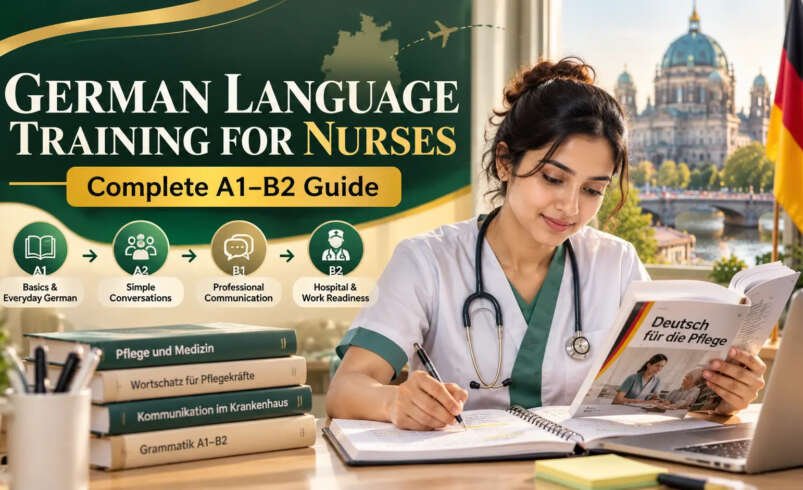

Germany is an attractive destination for nurses seeking international career opportunities. However, working in the German healthcare system requires more than professional nursing knowledge. Nurses also need German language skills to communicate with patients, understand medical instructions, interact with colleagues, and manage everyday situations at work.
German Language Training for Nurses helps nursing professionals develop the communication skills needed to prepare for healthcare-related opportunities in Germany. With structured learning, regular speaking practice, and medical vocabulary training, nurses can gradually improve their German proficiency and prepare for the language requirements of their intended role.
GermanAcharya provides German language learning options for students and professionals who want to develop their German skills. In this guide, you will learn about the importance of German for nurses, the different language levels, essential vocabulary, exam preparation, and how to choose a suitable German language course.
Why Is German Language Training Important for Nurses?
Nurses communicate with patients, doctors, healthcare assistants, and other medical professionals throughout their working day. Therefore, understanding German is important for safe communication and effective patient care.
Here are some reasons why nurses should consider learning German before pursuing healthcare opportunities in Germany.
1. Communicate Effectively with Patients
Nurses need to understand patients’ symptoms, explain care procedures, ask questions, and provide reassurance. Learning German can help nurses communicate more clearly and understand patients’ needs.
2. Understand Medical Instructions
Healthcare professionals must understand workplace instructions, patient information, and clinical documentation. German language training can help nurses develop the reading, listening, and speaking skills required for these situations.
3. Prepare for German Language Examinations
Depending on the employer, region, and professional recognition process, nurses may need to demonstrate German proficiency through an accepted language certificate or another assessment. A structured course can help learners practise the relevant language skills.
4. Improve Workplace Communication
Working in a German-speaking healthcare environment involves discussions with colleagues, shift handovers, reporting patient concerns, and understanding workplace procedures. Regular language practice can help nurses prepare for these interactions.
5. Prepare for International Career Opportunities
Nurses interested in working in Germany can start learning German while researching qualification recognition, employment conditions, and other official requirements. Language proficiency is an important part of preparation, although it does not guarantee employment or professional recognition.
Which German Language Level Do Nurses Need?
The required German proficiency level depends on the nurse’s role, the relevant German state, the employer, and the applicable professional recognition process. B1 or B2 may be relevant in some pathways, but nurses should confirm the exact requirements with the responsible authority and employer.
German A1: Beginner Level
The A1 level introduces the basics of German. Learners practise greetings, introductions, numbers, simple questions, and common everyday expressions.
For nurses, A1 can provide a foundation for learning basic patient-related phrases and understanding simple conversations.
German A2: Elementary Level
At A2, learners expand their vocabulary and practise communicating in familiar situations. They learn to describe daily routines, ask straightforward questions, and understand simple spoken and written information.
This level helps build the foundation for more advanced German learning.
German B1: Intermediate Level
B1 focuses on independent communication in familiar situations. Learners practise describing experiences, explaining ideas, understanding conversations, and expressing their needs.
Nurses can use this stage to build more confidence in everyday communication while continuing to develop healthcare-related vocabulary.
German B2: Upper-Intermediate Level
B2 develops the ability to understand more complex language and communicate with greater detail. Learners practise discussing topics, understanding longer texts, and expressing ideas clearly.
Some nursing recognition pathways or employers may require B2 proficiency or additional profession-specific language assessment. Always verify the requirements that apply to your situation.
Important German Medical Vocabulary for Nurses
Learning medical vocabulary is an important part of preparing for a German-speaking healthcare environment. Start with common words and gradually move towards more specialised terminology.
| German Word | English Meaning |
|---|---|
| Der Patient / Die Patientin | The patient |
| Die Krankenschwester | The nurse (female) |
| Der Krankenpfleger | The nurse (male) |
| Der Arzt / Die Ärztin | The doctor |
| Das Krankenhaus | The hospital |
| Die Pflege | Nursing care |
| Die Schmerzen | Pain |
| Das Fieber | Fever |
| Die Medikamente | Medicines |
| Die Untersuchung | Examination |
| Der Blutdruck | Blood pressure |
| Die Temperatur | Temperature |
In addition to vocabulary, nurses should practise complete sentences. For example:
- Haben Sie Schmerzen? — Are you in pain?
- Wie fühlen Sie sich? — How are you feeling?
- Ich messe Ihren Blutdruck. — I am measuring your blood pressure.
- Bitte nehmen Sie dieses Medikament ein. — Please take this medicine.
- Haben Sie Fieber? — Do you have a fever?
These examples are useful for language practice. In actual clinical settings, nurses must follow their workplace protocols and use clear, appropriate communication.
What Should a German Language Course for Nurses Include?
Choosing the right course can make your learning journey more organised. Before enrolling, look for a programme that develops general German proficiency and supports your specific goals.
1. Grammar and Vocabulary
A strong foundation in grammar helps you construct correct sentences and understand spoken German. Vocabulary practice should cover everyday situations first, followed by relevant healthcare terminology.
2. Speaking and Listening Practice
Nurses need to understand different speakers and respond clearly. Interactive speaking exercises, listening activities, and role-play scenarios can help develop these skills.
3. Reading and Writing Skills
Reading practice may include everyday texts, instructions, and suitable healthcare-related learning materials. Writing exercises help learners improve sentence formation and written communication.
4. Medical German Practice
Where available, look for additional learning activities focused on patient conversations, symptoms, appointments, workplace communication, and nursing terminology.
5. Exam Preparation
If you need a recognised German certificate, check whether the course prepares you for the specific examination you plan to take. General German proficiency examinations and professional language assessments may have different requirements.
6. A Clear Learning Plan
A course should explain its levels, schedule, learning resources, and expected outcomes. Choose a programme that fits your current proficiency and the time you can dedicate to studying.
How to Prepare for German Language Training for Nurses
Learning German requires regular practice. You can make your preparation more effective by following a consistent routine.
Step 1: Assess your current level. If you are a beginner, start with basic German rather than memorising advanced medical terms immediately.
Step 2: Practise every day. Spend time on vocabulary, grammar, listening, reading, and speaking. Short, regular sessions can help you build a sustainable habit.
Step 3: Learn healthcare vocabulary gradually. Once you understand basic sentence structures, begin practising common medical terms and patient-related expressions.
Step 4: Listen to German conversations. Use suitable learning audio and beginner-friendly videos to improve your understanding of pronunciation and spoken language.
Step 5: Practise role-play conversations. Simulate simple situations such as introducing yourself, asking about pain, discussing appointments, or explaining routine care.
Step 6: Check the official requirements. Before paying for an examination or applying for a job, confirm the required language level, accepted certificates, professional recognition steps, and documentation.
Learn German with GermanAcharya
GermanAcharya offers German language learning options for learners working towards different proficiency levels, including A1, A2, B1, and B2. These levels can help nursing professionals build a foundation in German and progress towards more advanced communication.
Depending on the selected course, learners can explore online classes, learning resources, and Goethe/TELC exam preparation support. Before enrolling, confirm whether the chosen programme includes medical German or nursing-specific language training, as general German courses may not cover every professional requirement.
If you are looking for German Language Training for Nurses, explore the German language courses at GermanAcharya to review the available options and identify a suitable starting level.
You can also read this guide to German language requirements for nursing in Germany to learn more about language preparation for nursing-related opportunities.
Frequently Asked Questions
1. What is German Language Training for Nurses?
German Language Training for Nurses helps nursing professionals learn German grammar, vocabulary, speaking, listening, reading, and writing. Some programmes also include medical terminology and healthcare communication practice.
2. Which German level is required for nurses in Germany?
The required level depends on the relevant recognition authority, German state, employer, and role. B2 may be required in some pathways. Check the official requirements for your specific situation.
3. Can Indian nurses learn German online?
Yes. Indian nurses can use online German courses to study from their current location. Before enrolling, check the class schedule, course format, learning materials, and whether professional language preparation is included.
4. How long does it take to learn German for nursing?
The duration depends on your starting level, study hours, course intensity, and regular practice. Progress varies, so ask your course provider for the syllabus and estimated duration of each level.
5. Is medical German different from general German?
Yes. General German develops everyday communication skills, while medical German focuses on healthcare terminology and professional interactions. Nurses may need both, depending on their role and the requirements of their workplace.
6. Does learning German guarantee a nursing job in Germany?
No. Language learning is only one part of the process. Nurses may also need qualification recognition, the appropriate professional authorisation, employment eligibility, and other documents required by the relevant authorities.
7. Where can I start learning German for nursing?
You can begin with an A1 course if you are a beginner and progress through the higher levels as your skills improve. Explore the available courses at GermanAcharya and confirm whether the selected course matches your nursing-related goals.
Conclusion
German Language Training for Nurses is an important step for nursing professionals preparing for potential opportunities in Germany. Developing German proficiency can help nurses communicate more effectively, understand everyday instructions, and prepare for the language requirements associated with their intended roles.
Start with the appropriate proficiency level, practise regularly, and gradually build your medical vocabulary. Most importantly, verify the official language and professional recognition requirements before making career decisions.
Explore GermanAcharya’s German language courses to begin building your language skills and plan your next step towards a German-speaking healthcare environment.