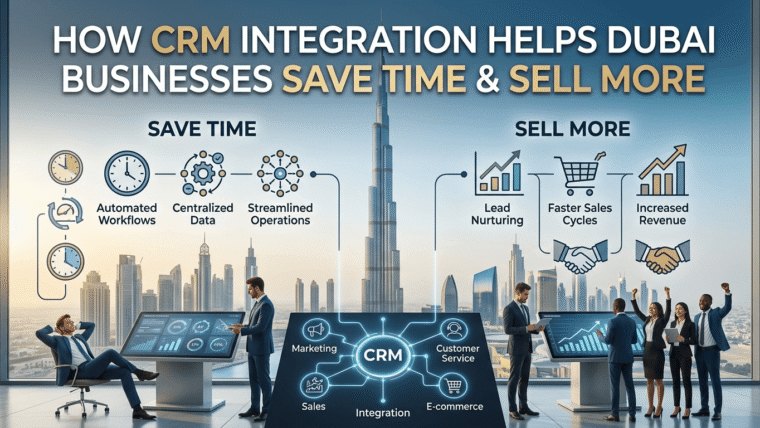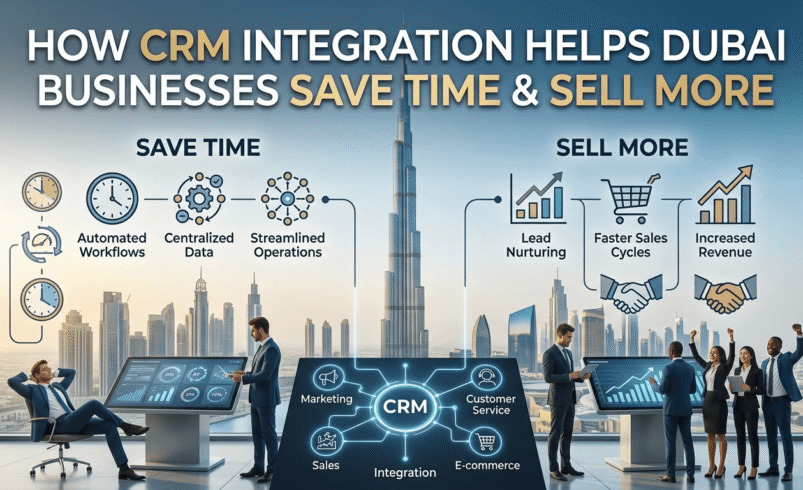

Businesses often use different tools to manage customer enquiries, sales, marketing and daily operations. When these tools work separately, employees may need to enter the same information multiple times or switch between platforms to find customer details. With effective CRM Integration Services in Dubai, businesses can connect relevant systems, organise customer information and create smoother workflows.
1. What Is CRM Integration?
Customer relationship management (CRM) integration connects CRM software with other business applications, such as websites, email platforms, sales tools and accounting systems. It allows selected information to move between connected tools, helping teams access the information they need without relying on repeated manual entry.
2. Reduce Repetitive Manual Tasks
Manually copying customer details from one platform to another takes time and can lead to errors. Integrating website forms with a CRM, for example, can help send new enquiries directly into the system. This allows teams to organise leads more efficiently and focus on responding to potential customers.
3. Keep Customer Information Organised
Customer information may be spread across emails, spreadsheets and sales platforms. A well-planned CRM integration can bring relevant records together and reduce unnecessary duplication. Businesses should also establish clear rules for updating records so conflicting information does not create confusion.
4. Improve Sales and Marketing Coordination
Sales and marketing teams often need access to the same customer information. Connecting relevant platforms can help marketing teams understand campaign responses while sales teams can review enquiries and follow-up history. Better information sharing supports more consistent communication throughout the customer journey.
5. Connect Your Website with Your CRM
A website is often one of the first places where potential customers interact with a business. Connecting contact forms and enquiry forms to a CRM can help capture customer details and organise incoming leads. Businesses should test these connections regularly to ensure enquiries are recorded correctly and reach the appropriate team.
6. Choose the Right Integration Method
The best integration method depends on the software a business already uses and the complexity of its workflows. Some applications offer built-in connectors, while other setups may require third-party integration tools or custom API development. Before choosing a solution, identify which systems need to exchange data and what information should be shared.
7. Protect Customer Data
Connecting business systems also means considering privacy and security. Limit access to authorised team members, use secure connections and review permissions carefully. Businesses should also check how customer information is transferred and stored across connected platforms.
8. Monitor and Test Your Integrations
An integration should be tested before it becomes part of everyday operations. Check whether records transfer correctly, duplicate entries are handled appropriately and errors can be identified. Regular monitoring helps businesses detect problems early and maintain reliable workflows.
Conclusion
CRM integration can help businesses organise customer information, reduce repetitive tasks and improve coordination between teams. The most effective approach starts with clear business goals, carefully selected integrations and reliable data management practices.
For companies exploring CRM Integration Services in Dubai, connecting the right business tools can support more efficient customer management and a smoother workflow. Learn more about digital solutions and business technology services through BI Communications.