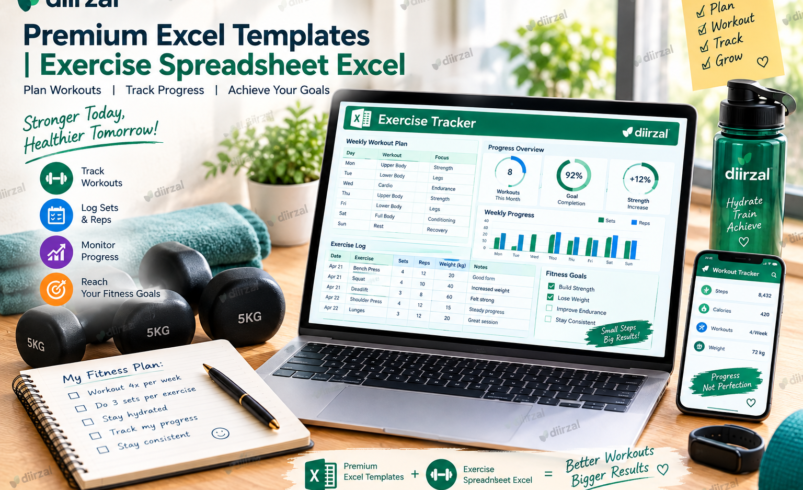

Premium Excel Templates for Exercise Spreadsheet Excel
Premium Excel Templates for Exercise Spreadsheet Excel. Explore Premium Excel Templates and Exercise Spreadsheet Excel to track workouts, monitor fitness goals, organize routines, and measure progress.
Make Fitness Tracking Easier with Excel
Staying consistent with exercise can be challenging when workouts, fitness goals, and progress records are scattered across different apps or notebooks. A simple spreadsheet can bring everything together, making it easier to plan routines, monitor improvements, and stay motivated. Whether you exercise at home, train at a gym, or follow a personal fitness program, an organized tracking system can help you build better habits.
Premium Excel Templates offer practical ways to organize personal information, schedules, and performance records without creating every worksheet from scratch. When paired with an Exercise Spreadsheet Excel, they can help turn everyday fitness activities into a structured routine that is easier to follow and evaluate.
The best part is that you can customize your spreadsheet according to your goals, experience level, and preferred training style. From recording daily workouts to reviewing monthly progress, Excel provides a flexible approach to fitness management.
Why Use a Spreadsheet to Track Exercise?
A consistent exercise routine involves more than simply showing up for a workout. You may need to remember previous exercises, track repetitions, record lifting weights, monitor cardio sessions, and schedule recovery days. Without a reliable system, these details can quickly become difficult to manage.
A spreadsheet creates a central place for all your fitness information. You can record your activities immediately after each session and review the results whenever you need to adjust your routine.
For example, someone working toward greater strength might track exercises, sets, repetitions, and resistance levels. A person focused on cardiovascular fitness could record walking distance, running time, cycling duration, or average pace.
These records make it easier to recognize patterns and identify gradual improvements. They can also highlight inconsistencies, such as missed sessions or insufficient recovery time.
Rather than relying entirely on memory, you have a written record that supports more informed decisions about your training schedule.
How Premium Excel Templates Simplify Fitness Planning
Creating a useful spreadsheet from a blank workbook can take time, especially if you are unfamiliar with formulas, formatting, or data organization. Ready-made templates provide a starting point that can be adapted to your needs.
Premium Excel Templates may include structured tables, organized layouts, automated calculations, progress summaries, and customizable tracking fields. The features available depend on the individual template, so it is worth reviewing the included functions before choosing one.
For fitness planning, a well-designed workbook might contain separate sections for weekly workout schedules, exercise logs, personal goals, and progress reviews.
You could also use color-coded categories to distinguish strength training, cardio, mobility work, and rest days. Simple formatting choices can make information easier to understand at a glance.
Another advantage is flexibility. If your routine changes, you can add new exercises, adjust your weekly schedule, or create additional tracking columns. This makes a spreadsheet useful for beginners as well as people with established training routines.
Before purchasing a template, check its compatibility with your version of Excel, the availability of formulas, and whether it includes instructions for customization.
Essential Features of an Exercise Spreadsheet Excel
A practical Exercise Spreadsheet Excel should make recording workouts straightforward rather than creating extra work. Start with the information that directly supports your fitness goals, then add more detailed tracking features when necessary.
1. Weekly Workout Planner
A weekly planner helps you decide which activities to complete on specific days. You might schedule strength training on Monday and Thursday, cardio on Tuesday and Saturday, and recovery activities on the remaining days.
Having a visible schedule can reduce uncertainty and make it easier to prepare for each session.
2. Exercise Performance Log
An exercise log records the details of individual workouts. Useful columns include the date, exercise name, number of sets, repetitions, resistance, duration, and personal notes.
For example, you can compare the weight used during a squat exercise across several weeks. These records provide context for evaluating progress and deciding when a gradual adjustment may be appropriate.
3. Goal Tracking and Progress Reviews
A goal tracker helps you measure outcomes over time. You might set a target for weekly workout frequency, running distance, or the number of completed training sessions.
Reviewing these figures every week or month can reveal whether your current routine is manageable and consistent.
4. Automated Calculations
Excel formulas can calculate weekly workout totals, average session duration, and the number of completed activities. Charts can display changes over time, making longer-term patterns easier to recognize.
Keep calculations simple and verify that formulas work correctly before relying on the results.
Practical Tips for Building a Sustainable Fitness Routine
A spreadsheet is most useful when it supports realistic habits. Start by identifying one or two clear goals instead of attempting to track every possible fitness measurement.
For example, a beginner might aim to complete three planned workouts each week. The spreadsheet can record whether each session was completed, what activities were performed, and how the person felt afterward.
Next, make data entry convenient. Use short column headings, dropdown lists where helpful, and consistent measurement units. If updating the workbook takes too long, you may be less likely to maintain it.
Review your records regularly, but avoid judging your progress using a single workout. Performance can fluctuate because of sleep, stress, recovery, and other everyday factors. Looking at trends over several weeks usually provides a more useful picture.
Include rest days and recovery notes in your plan. More exercise is not automatically better, and your schedule should reflect your current fitness level and individual needs.
Finally, protect your progress records by saving backups and keeping a copy of the workbook in a secure location. If you use Excel across multiple devices, choose a storage method that suits your workflow.
Choosing the Right Spreadsheet for Your Needs
The ideal workbook depends on how you exercise and which information you want to monitor. A beginner may need only a weekly planner and a basic workout log, while an experienced gym user might prefer detailed strength records, charts, and performance summaries.
Consider usability before selecting a complicated design. A clean worksheet that you update consistently is often more valuable than a feature-heavy workbook that becomes difficult to maintain.
Check whether the template allows you to add exercises, change categories, and modify formulas without disrupting its structure. Clear instructions and a logical layout can also make a difference, particularly if you plan to use the workbook for several months.
If you already rely on Premium Excel Templates for budgeting, scheduling, or other personal tasks, using a similar organized format for exercise can make your digital workflow more consistent.
Ultimately, choose a solution that fits your routine rather than forcing your routine to fit the spreadsheet.
Conclusion
Fitness progress becomes easier to evaluate when your workouts are organized and your goals are clearly defined. A reliable spreadsheet can help you plan sessions, record performance, recognize patterns, and maintain accountability over time.
Premium Excel Templates provide a convenient starting point for people who want structured tracking tools, while an Exercise Spreadsheet Excel can bring workout schedules, performance logs, and progress reviews into one accessible workbook.
Start with a simple system, update it consistently, and review your results at regular intervals. With realistic goals and a practical tracking method, you can make your fitness routine easier to manage and build habits that support long-term progress.