

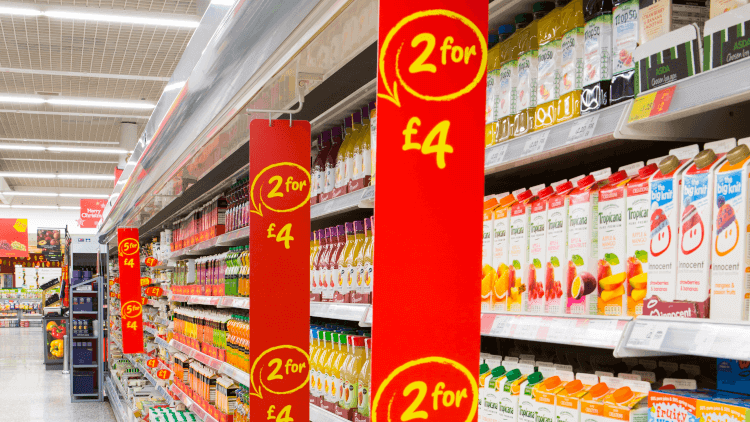

A new campaign launches on a fixed date. Standees, danglers, shelf-talkers, and branded display units are supposed to be live in stores nationwide the morning it goes public — not trickling in over the following two weeks as individual outlets get around to setting them up. By the time a brand manager notices half the planned stores never received their material, the campaign window has already closed, and the gap between what was planned and what actually happened is impossible to recover.
This is the operational reality behind POSM Distribution — moving point-of-sale marketing material from production to thousands of individual retail locations, on a timeline that’s usually tied to a campaign or seasonal launch date rather than a flexible delivery window. It looks, on paper, like a straightforward distribution task. In practice, it’s shaped by a specific combination of constraints that make it harder than ordinary product distribution.
The factor most people underestimate: volume of destinations, not volume of goods
A typical product shipment moves large quantities to a relatively small number of warehouses or large-format stores. POSM distribution usually runs the opposite pattern — comparatively small quantities of material, but spread across an enormous number of individual outlets, from large retail chains down to small neighborhood stores. A national campaign might need material placed in several thousand locations, each requiring only a handful of units.
This inversion changes what “efficient distribution” even means here. Retail merchandising logistics built for this pattern has to optimize for reaching the maximum number of individual points reliably, not for moving the maximum tonnage efficiently — the entire cost and complexity structure is different from standard bulk distribution, even though the total material volume involved might be modest.
The factor that creates the real pressure: a fixed, non-negotiable date
Campaign-linked material doesn’t have the flexibility most distribution schedules assume. A seasonal display tied to a festival period or a product launch date has to be in place before that date, not shortly after — “shortly after” defeats the entire purpose of the material existing. This compresses the distribution window into something closer to an event logistics timeline than a standard retail replenishment cycle.
This fixed-date pressure is what separates POSM distribution from routine retail stock movement — the deadline doesn’t bend, so every other part of the process has to be planned backward from it. Production lead time, transport routing, and last-mile delivery all have to be sequenced with enough margin that a delay at any single stage doesn’t cascade into missed placement dates across hundreds of stores.
The factor that’s easy to overlook: verification, not just delivery
Getting a box of display material to a store’s back room isn’t the same as getting it placed where it’s supposed to be visible to shoppers. Store staff, managing their own priorities, don’t always unpack and set up marketing material promptly — or correctly — without some mechanism confirming it actually happened. In-store marketing material distribution that stops at “delivered to the location” leaves a brand with no real visibility into whether the campaign materialized the way it was designed to.
Closing this gap usually requires some form of placement confirmation — photographic proof, store-level sign-off, or a follow-up check — built into the distribution process itself rather than assumed as a natural consequence of delivery. Without it, a brand can have near-perfect delivery performance and still have a campaign that underperformed simply because a meaningful share of stores never actually displayed the material.
The factor that compounds the others: inconsistent retail formats
A distribution plan built for large-format chain stores doesn’t automatically translate to small independent outlets, and vice versa. Delivery access, storage space for incoming material, and staff availability to handle setup all vary significantly across store types. Point-of-sale display management at national scale has to account for this format variability rather than applying one delivery and setup approach uniformly across every outlet type — what works for a large-format store’s loading dock doesn’t work for a small shop with no back room to speak of.
Why this combination is harder to solve generically than it looks
Each of these factors is manageable in isolation. Together — high destination count, fixed deadlines, placement verification needs, and format variability — they describe a distribution problem that’s structurally different from standard FMCG or retail replenishment logistics, even though the goods involved are often lightweight and low-value individually. A logistics setup built for bulk, predictable retail restocking tends to underperform here, not because the volume is too much to handle, but because the operational pattern is shaped differently.
AWL India’s work on POSM Distribution looks at how this kind of high-destination-count, deadline-driven distribution gets planned and executed — covering the routing, sequencing, and verification layers that campaign-linked material distribution actually requires.
AWL India supports last-mile distribution for retail brands running time-sensitive, high-volume-destination campaigns where delivery alone isn’t the measure of success — placement is.