
Some products cannot be treated like regular cargo. Vaccines, medicines, fresh food, dairy products, and other temperature-sensitive goods need controlled conditions throughout their journey. Even a short period outside the required temperature range can affect product quality and safety.
This makes cold chain distribution an important part of modern logistics. Technology is helping businesses monitor temperatures, track shipments, identify risks, and respond to problems before products are damaged.
Why Cold Chain Distribution Needs Better Technology
A cold chain involves several connected activities. Products may move from a manufacturer to a warehouse, then to a distribution centre, transport vehicle, retailer, hospital, or another destination.
Every stage creates a potential risk.
A refrigerated vehicle may experience a temperature problem. A warehouse door may remain open for too long. A cooling unit may stop working. If nobody notices the issue quickly, sensitive products may be exposed to unsuitable conditions.
Traditional temperature checks may not provide enough visibility. A worker may record a temperature manually at certain intervals, but this does not show what happened between those checks.
Technology allows businesses to monitor conditions continuously and create a more complete record.
How Real-Time Temperature Monitoring Works
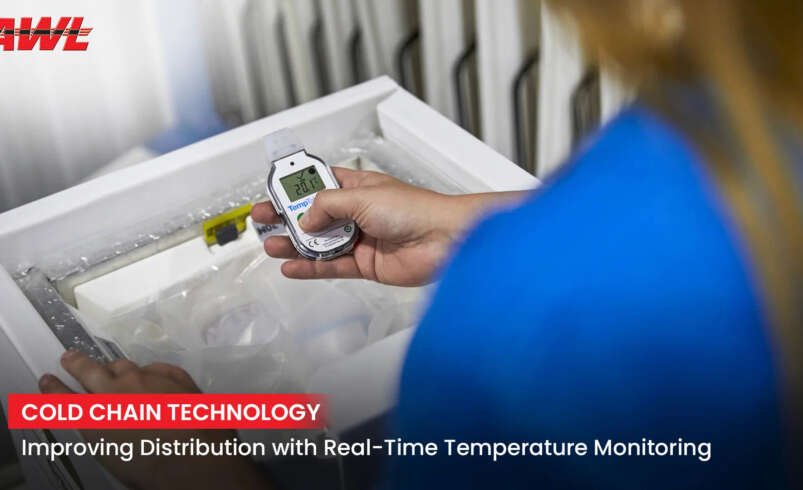
Real-time monitoring uses sensors and connected devices to measure temperature inside storage areas, containers, and transportation units.
The sensors collect temperature data and send it to a monitoring platform. Depending on the system, businesses can view this information remotely through a dashboard or receive alerts when conditions move outside a defined range.
For example, if the temperature inside a refrigerated vehicle rises above the permitted limit, the system can send an alert to the relevant team.
This gives businesses an opportunity to investigate the problem while the shipment is still in transit.
The system can also maintain a digital record of temperature conditions. This information can be useful for quality checks, compliance documentation, and identifying recurring operational problems.
How Technology Supports Cold Chain Logistics
Technology is changing how businesses manage cold chain logistics by providing better visibility across different stages of movement.
GPS tracking can show where a shipment is located. Temperature sensors can show the conditions inside the vehicle or container. Warehouse systems can provide information about inventory and shipment status.
When these systems are connected, businesses can understand both where a shipment is and what conditions it is experiencing.
This can help teams:
- Monitor temperature conditions during transportation.
- Identify temperature deviations quickly.
- Track the location of sensitive shipments.
- Maintain digital temperature records.
- Improve coordination between warehouse and transport teams.
- Investigate delays or handling problems.
The result is better visibility instead of relying only on manual updates.
Improving Temperature-Controlled Distribution
In temperature-controlled distribution, maintaining the correct environment is important from storage through final delivery.
Technology can help businesses monitor refrigerated warehouses, cold rooms, vehicles, containers, and other controlled environments.
Sensors can be placed at important points to measure conditions. Automated alerts can notify staff when readings move beyond acceptable limits.
This can be particularly useful during transportation. A driver may not immediately know that a refrigeration unit is developing a problem. A connected monitoring system can detect the temperature change and notify the operations team.
The team can then decide what action is required. This could include checking the refrigeration equipment, changing the vehicle, adjusting the route, or moving the shipment to suitable storage.
The exact response depends on the product and the company’s operating procedures.
How Data Helps Prevent Cold Chain Losses
Cold chain problems are not always caused by equipment failure.
Delays, poor loading practices, frequent door opening, incorrect storage, and inefficient routing can also affect temperature-sensitive shipments.
Historical temperature and shipment data can help businesses identify these patterns.
For example, if temperature deviations regularly occur during a particular route or at a specific warehouse stage, managers can investigate the cause.
Data can also help businesses understand which vehicles, facilities, or processes require attention.
This moves cold chain management from simply reacting to problems toward identifying and reducing recurring risks.
Technology Across the Cold Chain Supply Chain
A modern cold chain supply chain involves more than refrigerated transportation. Warehousing, inventory management, packaging, order processing, transportation, and delivery all need to work together.
Technology can connect these activities.
Warehouse management systems can track where temperature-sensitive products are stored. IoT sensors can monitor environmental conditions. GPS systems can track shipments. Digital platforms can bring this information together for operations teams.
This makes it easier to understand the condition and location of products as they move through the supply chain.
Better visibility can also improve coordination. Warehouse teams can prepare orders based on dispatch schedules, while transport teams can receive information about shipment requirements.
What Businesses Should Consider Before Implementing Technology
Technology alone cannot create an effective cold chain.
Businesses should first identify which products need temperature control and what conditions must be maintained. They should then determine where monitoring is required across storage and transportation.
Important considerations include sensor accuracy, alert systems, connectivity, data storage, device maintenance, and integration with existing logistics systems.
Businesses should also establish clear procedures for responding to temperature alerts. An alert is useful only when the responsible team knows what action to take.
Regular equipment checks and staff training remain important even when monitoring is automated.
Final Thoughts
Temperature-sensitive products need consistent handling from storage to final delivery. Manual checks alone may not provide enough visibility across a complex logistics network.
Technology can strengthen cold chain distribution through real-time temperature monitoring, shipment tracking, automated alerts, and digital records. These tools can help businesses identify problems earlier and make better operational decisions.
For companies managing medicines, food, dairy, or other temperature-sensitive products, combining reliable technology with trained teams and clear processes can create a more controlled and responsive cold chain operation.