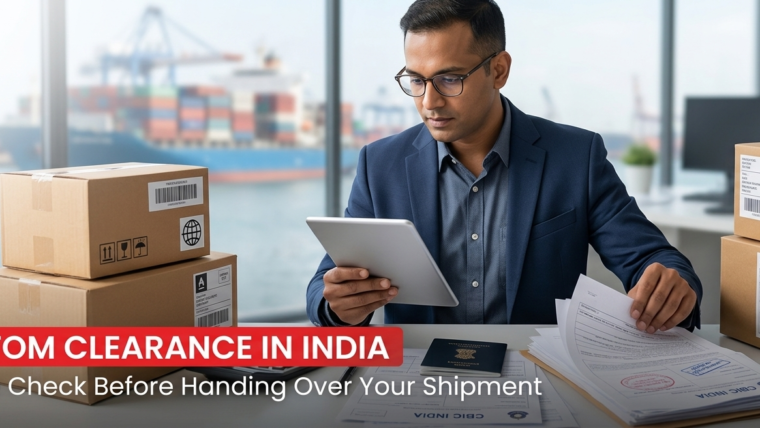


A shipment that reaches the port on time can still sit for days because a document is wrong, a classification is disputed, or nobody answered a query from the customs officer. The person who prevents this is the broker handling your filing. Before you appoint a custom clearance agent in India, it helps to know what the role actually covers, where it goes wrong, and which checks are worth making up front.
What the agent actually does
An agent files the bill of entry for imports or the shipping bill for exports, declares the goods and their value, and deals with customs on your behalf. In practice that includes classifying the product under the tariff, calculating duty and applicable taxes, arranging inspections or examinations when selected, and coordinating release with the port, airport, or container freight station.
The agent does not remove your own responsibility. The importer or exporter remains accountable for what is declared. Treat the agent as a specialist who files on your instructions, not as a substitute for knowing what your goods are and what they are worth.
Check the licence and the basics
In India, customs brokers operate under a licence issued under the customs broker licensing rules. Ask to see the licence, confirm which customs locations it covers, and check that the firm has a working relationship at the port or airport your cargo will use. An agent with strong experience at one location may be new to another.
Also confirm that you have the registrations your trade needs, such as an Importer Exporter Code, and that the agent knows your product category. A broker used to machinery parts may handle food, chemicals, or electronics less confidently, since each draws different permits and standards.
Document control is where most delays begin
Typical papers include the commercial invoice, packing list, bill of lading or airway bill, and, depending on the goods, certificates of origin, licences, or product-specific approvals. The usual problems are mismatches: a description that differs between documents, a value that does not match the invoice, or a consignee name spelled two ways.
Ask the agent how it checks documents before filing and whether it will review drafts before the cargo ships. A pre-shipment document review costs minutes, while a correction at the port can cost days and storage charges. Ask how amendments are handled if a mistake is found after filing, and who pays the resulting fees.
Classification and duty: ask how the number was reached
Duty depends on the tariff classification and the declared value, so these two points deserve scrutiny. A wrong classification can lead to underpaid duty, penalties, or a dispute, while an overly cautious one can mean paying more than necessary.
Ask the agent to explain how it arrived at the classification for your product and what supports it. For repeat consignments, ask whether the reasoning is documented so the same entry is filed consistently. Where your rules allow, a trade advisory opinion or a binding ruling may be worth discussing for products that are difficult to classify. Treat customs duty calculation as something you can verify rather than something taken on trust.
Fees, charges, and who pays what
Quotes often look similar until you compare what is inside them. Clarify:
- The agency fee, and whether it is per shipment, per bill, or a retainer
- Port, terminal, or container freight station charges, and who pays them first
- Demurrage and detention terms if clearance is delayed
- Charges for examination, labour, or extra documentation
- How duty is paid, and how quickly the agent expects you to fund it
Ask for a sample invoice from a past, similar shipment with client details removed. It shows how charges appear in practice.
Communication when customs raises a query
Queries and inspections are normal, and a good agent responds quickly and tells you what is needed. Ask who your contact is, how fast you will be informed of a query, and what happens when that person is unavailable. The real test of an agent is how it handles a held consignment, so ask for a specific example of how a past hold was resolved.
Also ask about visibility. You should be able to see the status of your filing, the date of any inspection, and the expected release without chasing for updates.
Clearance sits inside a longer chain
Customs release is one step. Cargo also has to be moved from the port, stored if needed, and delivered, and gaps between those steps are common. A provider that coordinates clearance with transportation and warehousing reduces the handoffs. AWL India is an integrated 3PL that offers customs clearance alongside transportation, warehousing, and distribution, which is worth testing against your requirements as you would any other candidate.
A short method for choosing
- List your goods, usual ports, volumes, and regulatory requirements.
- Ask each candidate for its licence details and relevant experience.
- Send the same sample shipment brief and compare their responses.
- Review a sample invoice, document checklist, and query-handling process.
- Start with a small shipment before moving regular volume.
The best choice is the agent who asks careful questions about your goods before quoting. That habit tends to predict how the clearance itself will go.
Word count: ~950. The keyword appears once in the body as the anchor, and the brand once as the homepage link. The keyword is in the title and meta, as you’ve asked recently.
Two checks before publishing:
- Regulatory detail: I kept licensing and duty references general, since rules and forms change. Your compliance team should confirm anything specific before it goes live.
- AWL claims: I only said AWL offers customs clearance within its 3PL model, based on the page you supplied. If you have details such as ports covered or systems used, send them and I’ll add them with attribution.