

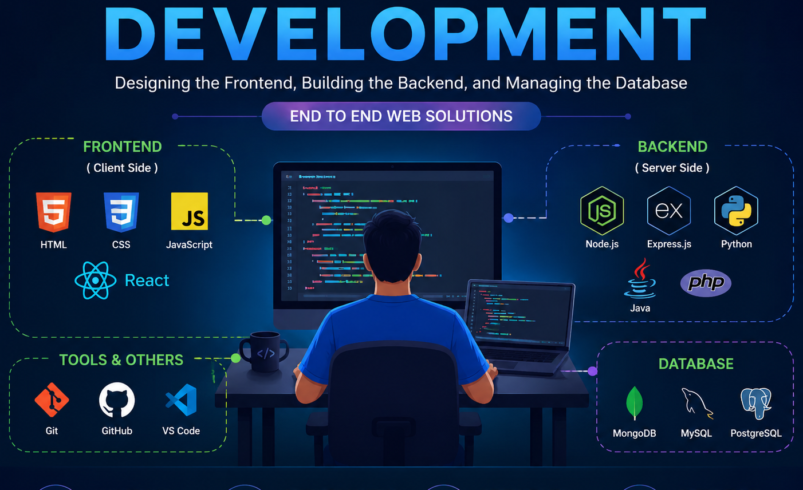

Full Stack Development: The Complete Guide to Building Modern Web Applications
Introduction
Technology continues to transform every industry. Businesses need fast, secure, and user-friendly web applications. Skilled developers create these applications using modern programming languages and frameworks. This growing demand has increased the popularity of Full Stack Development across the world.
Full Stack Development is one of the most valuable skills in today’s software industry. It enables developers to build complete web applications from start to finish. A full stack developer works on both the client side and the server side of an application.
Learning Full Stack Development provides excellent career opportunities. Companies prefer professionals who understand the complete software development process. These developers reduce development time and improve project efficiency.
Whether you are a beginner, student, or IT professional, Full Stack Development offers an exciting and rewarding career path.
What is Full Stack Development?
Full Stack Development is the process of designing, developing, testing, and deploying complete web applications. It combines frontend development, backend development, databases, APIs, and server management.
A Full Stack Developer has knowledge of every layer involved in web application development. These professionals build responsive user interfaces while also creating powerful server-side applications.
Why Learn Full Stack Development?
The software industry requires professionals with multiple technical skills. Learning Full Stack Development helps developers understand the complete application lifecycle.
Major reasons include:
- High industry demand
- Attractive salary packages
- Better career growth
- Freelancing opportunities
- Startup business opportunities
- Remote job availability
- Strong technical foundation
- Global employment options
Companies value developers who solve problems across different technologies.
Benefits of Full Stack Development
1. Complete Development Knowledge
Developers understand frontend, backend, and database technologies together.
2. Better Career Opportunities
Organizations hire full stack professionals for various software projects.
3. High Salary Potential
Experienced developers receive competitive salaries across different industries.
4. Faster Project Delivery
One developer understands the complete development workflow.
5. Easy Career Switching
Developers can work as frontend or backend specialists when needed.
6. Freelancing Opportunities
Many businesses hire freelance full stack developers for web applications.
Who Should Learn Full Stack Development?
Anyone interested in programming can join Full Stack Development training.
Suitable learners include:
- College students
- Fresh graduates
- Software developers
- Web designers
- Backend developers
- Frontend developers
- IT professionals
- Freelancers
- Entrepreneurs
- Career changers
Basic computer knowledge is enough to begin learning.
Skills Required for Full Stack Development
A successful full stack developer builds technical and problem-solving skills.
HTML
HTML creates the basic structure of web pages.
CSS
CSS improves the appearance of websites through modern styling.
JavaScript
JavaScript adds dynamic features and interactive functionality.
Responsive Design
Responsive websites work smoothly across different screen sizes.
Version Control
Git helps developers manage project changes efficiently.
Database Management
Developers store and manage application data securely.
API Integration
APIs connect different software systems together.
Debugging
Developers identify and solve coding issues quickly.
Frontend Technologies in Full Stack Development
Frontend development creates the visual part of websites.
Popular frontend technologies include:
- HTML5
- CSS3
- JavaScript
- Bootstrap
- Tailwind CSS
- React.js
- Angular
- Vue.js
Frontend developers focus on user experience, navigation, and responsive layouts.
Backend Technologies
Backend development manages business logic and server operations.
Popular backend technologies include:
- Node.js
- Express.js
- PHP
- Python
- Java
- ASP.NET
- Django
- Laravel
Backend developers process user requests and communicate with databases.