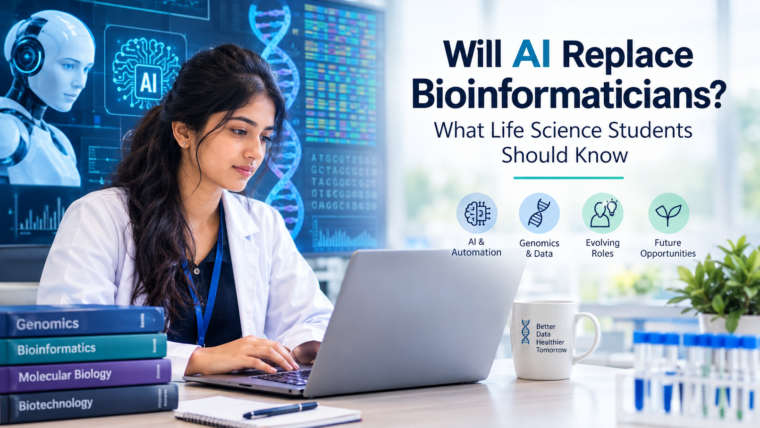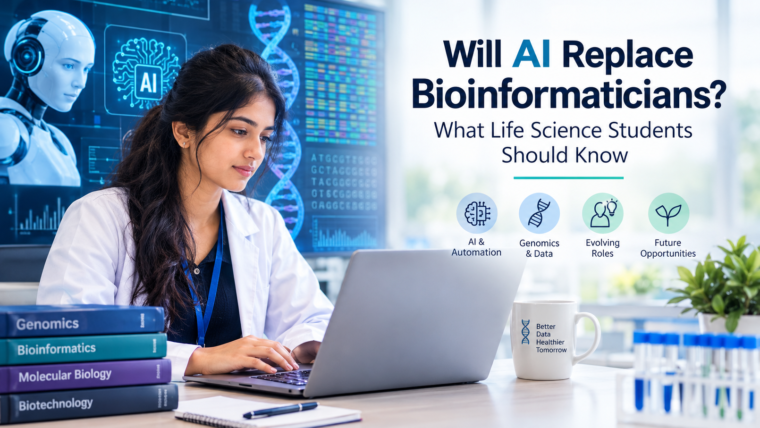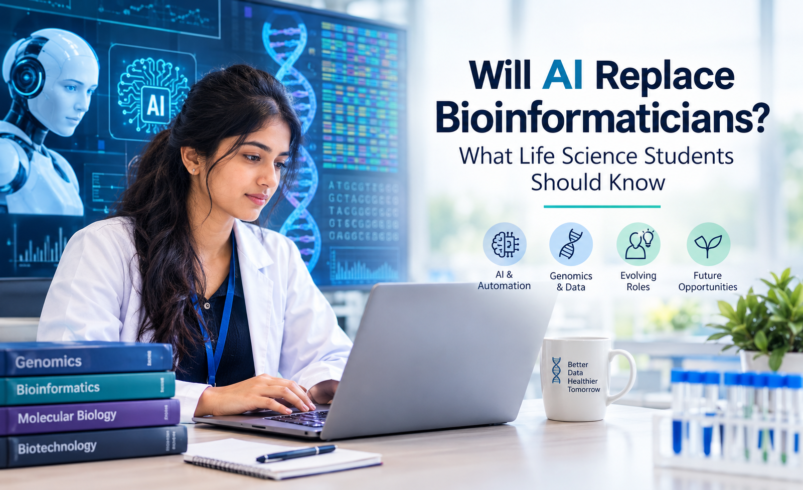

Artificial intelligence is now reading DNA, predicting diseases, and speeding up drug discovery. For life science students in Kerala, this changes what employers expect and which skills lead to jobs.
This guide explains how AI is changing genomics, which careers are growing, and what to learn first.
Why AI and Genomics Belong Together
Modern sequencing machines produce huge amounts of data. A single genome run can generate gigabytes of information, far more than any person can review by hand.
AI finds patterns in that data quickly and accurately. That is why genomics and AI are becoming one career space, not two.
Where AI Is Already Used in Genomics
- Variant detection: Spotting mutations linked to disease
- Drug discovery: Predicting which compounds are worth testing
- Diagnostics: Analyzing lab and imaging data faster
- Protein structure prediction: Understanding how proteins fold and function
- Precision medicine: Matching treatments to a patient’s genetic profile
These are real applications, and labs and companies are hiring people who can work with them.
Why Bioinformatics Is the Bridge
AI doesn’t replace biologists. It needs people who understand both the biology and the data. That’s where Bioinformatics Training in Kerala becomes valuable.
A solid foundation teaches you:
- How sequencing data is structured and cleaned
- How analysis pipelines work
- Basic programming and statistics for biology
- How to interpret results, not just generate them
Once you have these skills, learning machine learning tools gets much easier.
Career Paths to Consider
Students who combine lab skills with data skills stand out. Growing roles include:
- Genomics data analyst
- Bioinformatics research associate
- Clinical genomics specialist
- Computational biology trainee
Many of these roles barely appeared in Indian job listings a few years ago.
Skills to Build Now
- Lab fundamentals: DNA extraction, PCR, and sequencing workflows
- Basic Python or R: Enough to handle and visualize biological data
- Statistics: The base for understanding any AI model
- Critical thinking: AI can be wrong, and you need to know when to question it
- Real project experience: Employers value work on actual datasets over theory
Kerala’s Growing Role
Kerala’s biotech ecosystem is expanding, and students no longer need to move to bigger cities for quality exposure. A forward-looking biotechnology company in Kerala now offers internships and training that combine lab work with data analysis, which is the mix AI-driven biotech demands.
Where Veta Genomics Fits In
Veta Genomics offers training across sequencing, microbiology, and bioinformatics, so students can build lab and data skills together. For anyone planning a career where AI meets biology, that combined foundation is a practical place to start.
Final Thoughts
AI will not replace life science graduates. But graduates who understand AI-driven analysis will likely have the edge over those who don’t. Start building both skills now, and you’ll be ready for where genomics is heading.