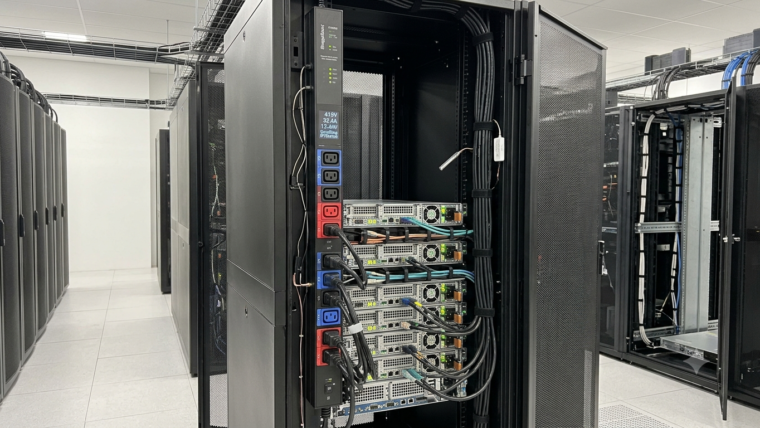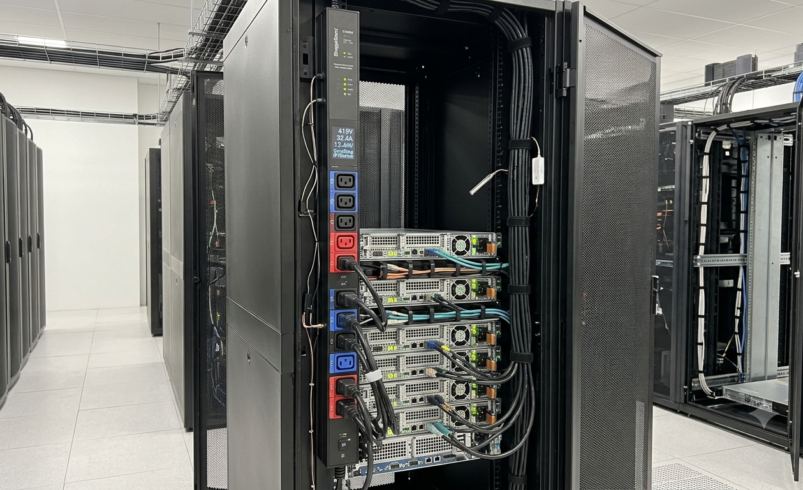

Managing electricity across hundreds or thousands of server cabinets used to be a manual, guesswork-heavy chore. Facility technicians walked up and down hot aisles with handheld clamp meters, wrote circuit breaker assignments on paper clipboards, and often discovered overloaded outlets only after a breaker tripped and knocked production servers offline. Today, deploying an intelligent rack PDU (Power Distribution Unit) replaces manual spreadsheets and blind guesswork with real-time digital visibility, automated load balancing, and remote outlet control right at the cabinet level.
As artificial intelligence clusters, high-density virtualization hosts, and cloud storage arrays push cabinet power demands from 5 kW to 40 kW and beyond, keeping track of power consumption, thermal hot spots, and phase balance becomes impossible without smart hardware at the edge of the power chain. A modern intelligent strip acts as both a rugged power delivery system and a networked diagnostic sensor, feeding live electrical and environmental data straight into your management dashboard.
Below is a practical, problem-solving guide showing how smart rack-level power distribution simplifies daily data center operations, unlocks stranded capacity, reduces energy waste, and prevents unplanned downtime.
1. Real-Time Visibility: Replacing Spreadsheets with Live Telemetry
The biggest headache in traditional server rooms is not knowing how much power each cabinet—or each individual server—is actually drawing at any given moment. IT teams typically rely on server nameplate wattage ratings, which vastly overestimate real-world power draw, leaving expensive electrical capacity sitting unused.
Input-Level vs. Per-Outlet Metering
Intelligent strips solve this visibility gap by embedding high-precision metering chips (often certified to ANSI C12.20 Class 0.5 or ±1% billing-grade accuracy) directly inside the vertical zero-U housing:
-
Input and Branch Metering: Tracks total amperage, voltage, active power (kW), apparent power (kVA), power factor, and kilowatt-hour (kWh) energy consumption across each incoming phase and branch circuit breaker.
-
Per-Outlet Metering: Measures exact wattage and current draw at every single C13/C15 or C19/C21 receptacle. This makes it effortless to spot “zombie servers” that are powered on and wasting electricity while running zero active workloads, or to generate accurate energy bills for colocation tenants.
Reclaiming Stranded Power Capacity
When engineers guess server loads using nameplate numbers, they often cap a 20 kW cabinet after installing just 10 kW of actual hardware. Live per-outlet telemetry shows the true continuous power draw, allowing capacity planners to safely add more servers to existing cabinets without building new electrical rooms.
2. Remote Outlet Switching: Solving Lockups Without Walking the Floor
When a remote server, network switch, or storage controller freezes at 3:00 AM, sending an on-site technician into the server hall to physically unplug and replug power cords wastes valuable recovery time—especially in unmanned edge sites or sprawling hyperscale campuses.
Instant Remote Power Cycling
A switched rack PDU integrates latching relays on every individual outlet, giving administrators secure browser and API control over power states:
-
Individual Outlet Reboot: Power-cycle a single hung server remotely in seconds without disturbing adjacent hardware in the same cabinet.
-
Out-of-Band Group Switching: Link Outlet A on PDU 1 and Outlet B on PDU 2 together so a dual-corded server can be cleanly power-cycled with one click from a single management screen.
-
Sequential Startup Delays: Program staggered power-on delays (such as 2-second intervals between outlets) after a power restoration event. This prevents dozens of server power supplies from surging simultaneously and tripping upstream branch breakers.
-
Locking Unused Outlets: Administrators can administratively turn off empty outlets so unauthorized staff cannot plug in unapproved hardware that violates cabinet power budgets.
3. Simplifying Three-Phase Load Balancing at the Outlet Level
In modern three-phase rack strips (such as 208V Delta or 415V/240V Wye units), keeping electrical current balanced across Phase A, Phase B, and Phase C is critical. If one phase carries far more load than the others, its circuit breaker can trip prematurely even while the PDU as a whole still has plenty of spare wattage.
Color-Coded, Alternating-Phase Outlets
Legacy three-phase strips grouped all Phase A outlets at the top, Phase B in the middle, and Phase C at the bottom—making accidental phase imbalance almost guaranteed when technicians installed servers from the bottom up.
Modern intelligent units simplify phase balancing through smart physical design:
-
Alternating-Phase Layout: Receptacles cycle continuously (Phase A, Phase B, Phase C) down the entire vertical strip. As technicians plug servers into adjacent outlets, loads naturally balance across all three phases automatically.
-
Color-Coded Receptacles and Breakers: Matching color-coded outlet bezels and hydraulic-magnetic branch breakers let installers visually trace which outlet belongs to which phase and breaker in seconds—eliminating manual circuit-tracing errors during tight maintenance windows.
4. Proactive Power Quality Diagnostics and Automated Alerts
Power problems rarely happen without warning. Before a server power supply fails or a breaker trips, subtle electrical anomalies appear on the line. Intelligent rack strips continuously monitor power quality metrics that basic power strips completely ignore.
Catching Power Anomalies Early
-
Total Harmonic Distortion (THD) and Crest Factor: Switch-mode server power supplies draw current in choppy pulses. Monitoring harmonic distortion alerts engineers to degrading server PSUs or excessive neutral current buildup before overheating occurs.
-
Voltage Dip and Swell Logging: High-speed waveform capture records millisecond voltage sags or spikes, helping facility teams prove whether a server reboot was caused by an internal IT fault or an upstream utility disturbance.
-
Tiered Threshold Notifications: Administrators set custom warning thresholds (such as 70% load) and critical thresholds (such as 85% load). The moment current crosses a limit, the PDU sends instant encrypted alerts via SNMPv3 traps, email, or RESTful API webhooks so teams can shift workloads before an overload trip occurs.
5. Plug-and-Play Environmental and Physical Security Monitoring
Heat, humidity, and unauthorized cabinet access pose just as much risk to server uptime as electrical overloads. Instead of running separate network cables and power supplies for standalone environmental monitors, intelligent rack strips include built-in sensor ports that turn every PDU into a rack-level climate and security hub.
Integrated Rack Micro-Climate Tracking
-
Multi-Point Temperature and Humidity Probes: Technicians plug compact digital sensors directly into the PDU and clip them to the top, middle, and bottom of the front cabinet door. This verifies cold-aisle intake temperatures comply with ASHRAE guidelines and allows facility teams to safely raise chiller setpoints to save cooling energy.
-
Differential Airflow and Water Leak Sensors: Connecting rope leak sensors beneath liquid-cooled AI racks or floor tiles triggers immediate alarms if coolant drips, while airflow probes confirm hot/cold aisle containment doors are sealed.
-
Electronic Door Locks and Asset Tracking: Smart rack PDUs can power and control electronic swing-handle cabinet locks via RFID badge readers, logging who opened each cabinet and triggering security alarms if a door is left ajar.
6. Streamlined Network Deployment and DCIM Integration
Deploying 500 intelligent PDUs used to mean assigning 500 individual IP addresses, running 500 Ethernet switch ports, and manually configuring each unit one by one. Modern intelligent platforms dramatically simplify large-scale rollouts.
Daisy-Chaining and Zero-Touch Provisioning
-
Cascading / Daisy-Chain Networking: Up to 16 or 32 rack PDUs can be linked together via standard Ethernet or USB cascading ports, sharing a single IP address and single top-of-rack switch port while maintaining isolated network security.
-
USB and DHCP Zero-Touch Configuration: Technicians can flash firmware, load SSL/TLS 1.3 security certificates, and configure SNMPv3 credentials across hundreds of PDUs automatically via DHCP scripts or by inserting a pre-configured USB drive during installation.
-
Seamless DCIM Compatibility: Open protocol support—including SNMPv3, Modbus TCP/IP, Redfish, and JSON-RPC/RESTful APIs—ensures telemetry flows directly into any Data Center Infrastructure Management (DCIM) platform without proprietary software lock-in.
Management Capability Comparison Table
| Management Task | Basic Unmetered Rack Strip | Intelligent Metered & Switched Rack PDU |
| Capacity Tracking | Manual spreadsheets and handheld clamp meters | Live per-outlet and phase kW, Amps, and kWh telemetry |
| Rebooting Frozen Servers | Requires dispatching on-site staff to pull cords | Instant remote outlet power cycling from any browser |
| Three-Phase Balancing | High risk of accidental single-phase overload | Color-coded, alternating-phase outlets balance loads automatically |
| Overload Prevention | Zero warning before branch breaker trips | Automated two-tier SNMPv3/email alerts at 70% and 85% load |
| Cabinet Climate & Security | Requires separate network switches and sensor hubs | Plug-and-play temperature, humidity, leak, and door-lock ports |
| Network Switch Ports Needed | None (completely blind to management systems) | Up to 32 PDUs daisy-chained behind a single IP address |
Step-by-Step Checklist to Simplify Your Rack Power Management
Follow these five practical steps when standardizing rack power distribution across your data hall:
-
Choose Alternating-Phase, Color-Coded Strips: Eliminate manual phase-balancing math by deploying three-phase strips with alternating outlets and matching color-coded breakers.
-
Require Billing-Grade Per-Outlet Metering: Specify ±1% or ANSI C12.20 Class 0.5 accuracy so you can reclaim stranded cabinet capacity and track true server energy usage.
-
Standardize on Cascading Network Ports: Reduce top-of-rack Ethernet switch costs by daisy-chaining multiple intelligent PDUs under a single managed IP address.
-
Deploy Front-Inlet Temperature Probes on Every Rack: Use the PDU’s built-in sensor ports to monitor cold-aisle intake temperatures and optimize data center cooling efficiency.
-
Automate Two-Tier Overload Alerts in DCIM: Connect your PDUs via encrypted SNMPv3 or Redfish APIs and configure early warning alerts before any circuit approaches the 80% NEC continuous load ceiling.
Frequently Asked Questions
How does an intelligent rack PDU help reclaim stranded power capacity?
Without real-time metering, IT teams size cabinet loads using maximum server nameplate ratings, which are often 40% to 50% higher than actual operating power draw. An intelligent rack PDU measures exact live wattage per outlet, revealing how much unused power headroom remains in each cabinet so you can safely add more servers without installing new circuits.
What is PDU cascading, and how does it reduce network infrastructure costs?
PDU cascading (or daisy-chaining) allows technicians to link multiple rack PDUs together using standard patch cables so they communicate through a single upstream Ethernet switch port and a single IP address. In a row of 20 cabinets (40 PDUs), cascading reduces required top-of-rack switch ports from 40 down to just 2 or 4, saving thousands of dollars in switching hardware and cabling.
How do color-coded, alternating-phase outlets prevent accidental breaker trips?
In a three-phase rack PDU, alternating-phase design cycles Phases A, B, and C outlet by outlet from top to bottom, while color-coding visually matches each outlet to its corresponding branch breaker. As technicians plug servers into adjacent receptacles, electrical load distributes evenly across all three phases automatically, preventing a single phase from overloading while others sit underutilized.
Can an intelligent rack PDU monitor cabinet temperature without extra network drops?
Yes. Modern intelligent PDUs feature dedicated plug-and-play sensor ports that accept digital temperature, humidity, differential air pressure, and water leak probes. Sensor data travels back to your DCIM software over the PDU’s existing network connection, eliminating the need for standalone environmental monitoring appliances or extra Ethernet ports.
Why are latching relays important in a switched rack PDU?
Unlike standard electromagnetic relays that consume continuous power and can drop connected servers if the PDU’s internal control board loses power or reboots, bistable latching relays mechanically lock into their last known state (on or off). This ensures connected servers stay powered on without interruption even during firmware updates or controller resets.
Simplifying data center power management starts with putting accurate telemetry, automated phase balancing, and remote switching control directly inside every server cabinet. By replacing blind basic power strips with intelligent, daisy-chained rack units equipped with per-outlet metering and environmental probes, facility teams eliminate manual circuit audits, prevent overload trips, and optimize cooling efficiency across the entire server floor. Build a smarter, easier-to-manage power distribution chain from the main transformer right down to the server outlet with engineered hardware solutions manufactured by Voltz for mission-critical reliability.