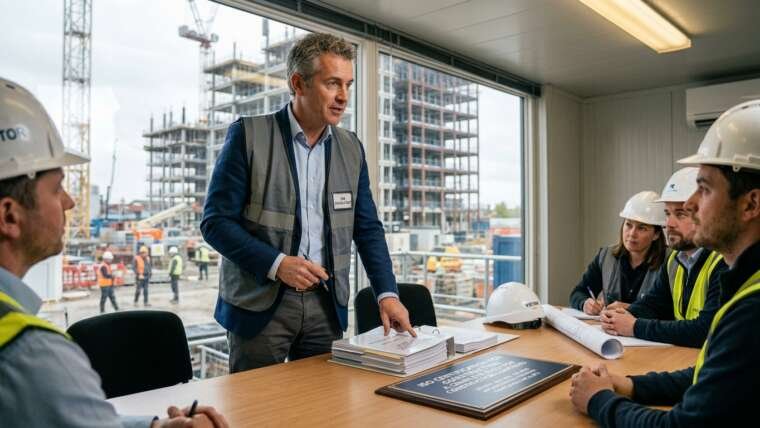

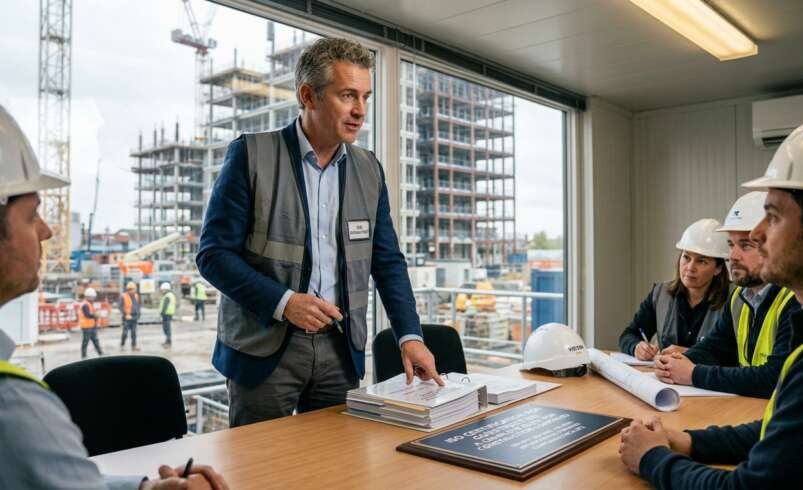

The construction industry involves complex projects, multiple contractors, suppliers, employees, materials, equipment, and strict project deadlines. Maintaining consistent quality, protecting workers, managing environmental responsibilities, and meeting contractual requirements can be challenging without structured management systems. An ISO Certification Consultant for Construction can help construction companies develop, implement, and improve management systems that support quality, occupational health and safety, environmental performance, and operational efficiency.
ISO standards provide internationally recognized frameworks that organizations can use to establish consistent processes. However, implementing an ISO management system can be difficult when a company does not have the necessary internal expertise. A consultant can guide the organization through the preparation process, identify gaps, develop documentation, support implementation, and prepare the company for certification audits.
What Is an ISO Certification Consultant for Construction?
An ISO certification consultant is a professional who helps organizations understand and implement the requirements of relevant ISO standards.
For construction companies, consulting may cover quality management, environmental management, occupational health and safety, information security, and other management systems depending on the organization’s activities.
An ISO consultant does not issue the ISO certificate. Certification is generally performed by an independent certification body after the organization demonstrates that its management system meets the applicable standard requirements.
The consultant’s role is to help the construction company prepare effectively for that independent assessment.
Why ISO Certification Matters in Construction
Construction projects require consistency and control. A single quality issue, safety incident, environmental problem, or documentation error can affect project schedules and costs.
An ISO management system provides a structured approach to managing these areas.
For example, a quality management system can establish processes for monitoring materials, inspections, corrective actions, and customer requirements. An occupational health and safety management system can help organizations identify workplace hazards and establish appropriate controls.
An environmental management system can help construction companies manage waste, resource consumption, environmental risks, and compliance obligations.
ISO certification can also demonstrate that an organization has established a formal management system that has been independently assessed against a recognized standard.
Important ISO Standards for Construction Companies
Different ISO standards may be relevant to construction organizations depending on their activities and business objectives.
ISO 9001 – Quality Management
ISO 9001 is one of the most widely used management system standards. It focuses on quality management and customer satisfaction.
For construction companies, ISO 9001 can help establish consistent processes for:
- Project planning
- Quality inspections
- Supplier evaluation
- Material control
- Document management
- Nonconformity management
- Corrective actions
- Customer requirements
- Performance monitoring
A structured quality management system can help construction organizations reduce process inconsistencies and improve project control.
ISO 45001 – Occupational Health and Safety
Construction is associated with workplace hazards involving machinery, working at height, electrical systems, heavy materials, vehicles, and other activities.
ISO 45001 provides a framework for managing occupational health and safety risks.
A construction company implementing ISO 45001 can establish processes for hazard identification, risk assessment, worker consultation, emergency preparedness, incident investigation, and continual improvement.
The standard does not eliminate workplace risks, but it provides a systematic approach to identifying and managing them.
ISO 14001 – Environmental Management
Construction projects can generate waste, dust, noise, emissions, and other environmental impacts.
ISO 14001 provides a framework for establishing an environmental management system.
Construction companies can use this framework to identify environmental aspects, evaluate risks, establish objectives, manage waste, improve resource efficiency, and monitor environmental performance.
An environmental management system can help companies incorporate environmental considerations into project planning and operational processes.
ISO 27001 – Information Security
Construction companies increasingly depend on digital systems for project management, drawings, contracts, financial information, employee records, client information, and supplier data.
ISO 27001 provides a framework for managing information security risks.
It can be relevant to construction organizations that handle sensitive project information or rely heavily on cloud platforms and digital collaboration tools.
Role of an ISO Certification Consultant
An ISO consultant can provide support throughout the implementation process.
Initial Gap Assessment
The first stage generally involves assessing the company’s existing processes against the requirements of the relevant ISO standard.
The consultant identifies areas where current practices meet requirements and areas where improvements are needed.
For a construction company, this assessment may cover project management, quality control, procurement, safety procedures, environmental processes, documentation, training, and monitoring.
Management System Planning
After the gap assessment, the consultant can help develop an implementation plan.
The plan should define priorities, responsibilities, timelines, documentation requirements, training needs, and performance indicators.
A practical plan allows the construction company to introduce the management system without unnecessarily disrupting ongoing projects.
Documentation Development
Management systems require appropriate documented information.
Depending on the selected ISO standard, documentation may include policies, procedures, forms, records, risk assessments, objectives, inspection records, corrective action records, and monitoring information.
The documentation should reflect the company’s actual operations rather than simply creating generic documents that employees do not use.
Implementation Support
Developing documents is only one part of ISO implementation. Employees and management need to follow the established processes in day-to-day operations.
Consultants can support implementation by explaining requirements, assisting departments, providing training, and helping organizations establish practical controls.
For construction companies, implementation may need to take place across offices, project sites, warehouses, and other operational locations.
Internal Audit Support
Internal audits help organizations determine whether their management system is being properly implemented and maintained.
An ISO consultant can support internal audit planning and help organizations identify areas requiring corrective action.
Internal audits should provide useful information about process performance rather than becoming a paperwork exercise.
Management Review
Management review provides senior leadership with an opportunity to evaluate the effectiveness of the management system.
Topics may include objectives, audit results, customer feedback, incidents, nonconformities, performance indicators, risks, opportunities, and improvement activities.
Consultants can help organizations establish a structured management review process.
Benefits of Hiring an ISO Certification Consultant
Better Understanding of ISO Requirements
ISO standards contain specific requirements that may be difficult for organizations to interpret without experience.
A consultant can explain the requirements in practical terms and connect them to construction processes.
Reduced Implementation Challenges
Without proper planning, ISO implementation can become unnecessarily complicated.
Consultants can help organizations establish priorities and avoid common implementation mistakes.
Improved Documentation
Professional guidance can help construction companies create documentation that supports actual business processes.
Employee Awareness
Employees need to understand their responsibilities within the management system. Consultants can support awareness and training activities.
Better Audit Preparation
An organization that understands the certification process can prepare more effectively for an independent certification audit.
Continual Improvement
ISO management systems emphasize monitoring, evaluation, corrective action, and continual improvement. Consultants can help organizations establish processes for maintaining and improving the system after certification.
ISO Certification Process for Construction Companies
The certification journey generally involves several stages.
Step 1: Select the Appropriate Standard
The company should identify which ISO standard or standards are relevant to its activities and objectives.
Some construction organizations may implement ISO 9001, ISO 14001, and ISO 45001 as an integrated management system.
Step 2: Conduct a Gap Analysis
The existing processes are reviewed against the applicable standard requirements.
Step 3: Develop the Management System
Policies, procedures, controls, objectives, records, and responsibilities are established.
Step 4: Implement the System
Employees begin using the documented processes in actual operations and projects.
Step 5: Conduct Internal Audits
Internal audits are used to evaluate implementation and identify nonconformities or opportunities for improvement.
Step 6: Management Review
Senior management reviews system performance and determines whether additional improvements are needed.
Step 7: Certification Audit
An independent certification body assesses the management system against the relevant ISO standard.
If the organization meets the certification requirements, the certification body can issue the applicable certificate.
Integrated ISO Management Systems in Construction
Construction companies may need to manage quality, environmental performance, and occupational health and safety simultaneously.
Instead of maintaining completely separate systems, organizations can integrate related requirements into one management framework.
An integrated management system can combine common processes such as:
- Document control
- Internal audits
- Risk management
- Corrective actions
- Training
- Management review
- Performance monitoring
This can reduce duplication and make the management system easier for employees to use.
ISO Consulting for Construction Contractors
Contractors may benefit from ISO consulting when they need to demonstrate structured management practices to clients, project owners, or other stakeholders.
An effective management system can help contractors organize quality controls, supplier management, project documentation, safety processes, and performance monitoring.
The system should be appropriate for the size and complexity of the contractor’s operations.
ISO Consulting for Construction Suppliers
Suppliers of construction materials and services can also use ISO management systems to establish consistent processes.
For example, a supplier may use ISO 9001 to improve quality control, customer requirements management, purchasing processes, and nonconformity handling.
Environmental or occupational health and safety standards may also be relevant depending on the supplier’s activities.
How to Choose an ISO Certification Consultant
Construction companies should consider several factors when selecting a consultant.
Industry Experience
Construction processes differ significantly from those of other industries. Experience with construction projects can help consultants understand practical operational requirements.
Knowledge of Relevant ISO Standards
The consultant should have appropriate knowledge of the ISO standards relevant to the company’s objectives.
Practical Approach
The consultant should focus on implementing systems that employees can actually use rather than producing unnecessary documentation.
Training and Support
Good consulting should include appropriate guidance and employee awareness so that the organization can maintain the system after implementation.
Understanding of Certification
The consultant should understand the certification process while maintaining the distinction between consulting and independent certification.
Common ISO Implementation Mistakes
Construction companies can encounter several common challenges during ISO implementation.
One is treating certification as a documentation project rather than a management system. Documents alone do not demonstrate effective implementation.
Another mistake is creating procedures that do not reflect actual construction activities.
Organizations may also fail to involve employees or management sufficiently. Successful implementation requires participation across relevant departments and project teams.
Failing to conduct meaningful internal audits is another potential issue. Internal audits should identify real process weaknesses and opportunities for improvement.
Maintaining ISO Certification
Obtaining certification is not the end of the process. Management systems need to remain effective and continue meeting the applicable requirements.
Construction companies should regularly monitor processes, conduct internal audits, review objectives, address nonconformities, update documentation when necessary, and conduct management reviews.
Changes in projects, employees, technology, regulations, suppliers, and organizational structure may require the management system to be updated.
Continual improvement is an important part of maintaining an effective ISO management system.
Conclusion
An ISO Certification Consultant for Construction can help construction companies develop practical management systems that address quality, occupational health and safety, environmental performance, information security, and other organizational requirements.
From gap assessment and documentation to implementation, internal audits, training, and certification preparation, consulting support can make the ISO journey more structured and manageable.
The most effective approach is to integrate ISO requirements into everyday construction operations rather than treating certification as a one-time project. With appropriate planning, employee involvement, management commitment, monitoring, and continual improvement, construction companies can establish management systems that support consistent processes and long-term business performance.
An experienced consultant can provide the guidance needed to understand ISO requirements and prepare the organization for independent certification while ensuring that the management system remains practical for real construction projects.