

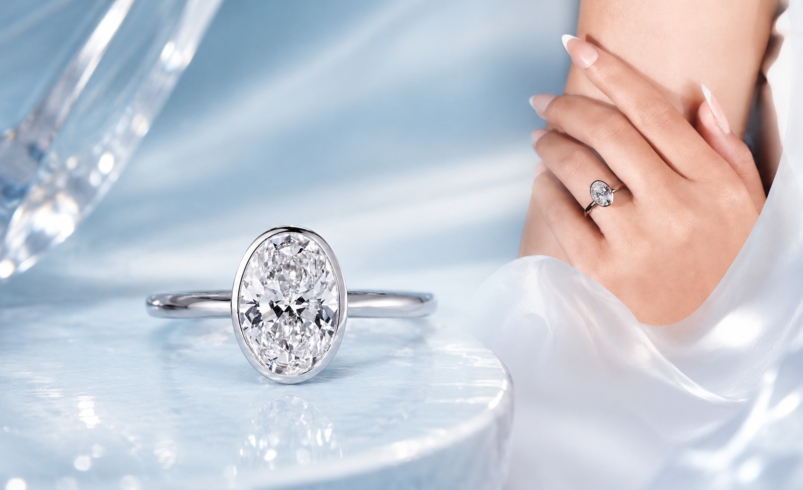

When choosing an oval cut lab grown diamond ring, the shape of the center diamond is one of the first things people notice. Unlike a round diamond, an oval diamond can look noticeably different depending on how long or wide it is. This difference is largely determined by its length-to-width ratio.
The length-to-width ratio compares the diamond’s length with its width. It helps describe whether an oval looks narrow and elongated, broad and rounded, or somewhere between the two. Understanding this measurement can make it easier to compare diamonds and select a shape that matches your personal taste.
The ratio is not a quality grade by itself. Instead, it is a useful measurement that works alongside cut quality, symmetry, proportions, faceting, and the overall appearance of the stone.
What Is the Length-to-Width Ratio?
The length-to-width ratio is calculated by dividing the length of an oval diamond by its width.
For example, imagine an oval diamond measuring:
- Length: 10 mm
- Width: 7 mm
The calculation would be:
10 ÷ 7 = 1.43
So, the diamond has a length-to-width ratio of approximately 1.43:1.
A higher ratio generally means the oval appears longer and narrower. A lower ratio usually creates a wider and more rounded appearance.
There is no single ratio that works for everyone. Some buyers prefer an elongated outline, while others like an oval with a fuller shape. Many modern buyers also see more options oval lab grown diamond rings styles to find designs that combine brilliance, comfort, and timeless appeal.
Why Does the Ratio Matter?
The length-to-width ratio affects the visual outline of an oval diamond. Two diamonds can have similar carat weights but appear quite different when viewed from above because their proportions are not the same.
A longer oval may create a slender appearance across the finger. A wider oval can look fuller and closer to a rounded shape.
This is especially useful when shopping online. Product photographs can sometimes make stones appear similar even when their measurements are different. Checking the actual dimensions and ratio gives you another way to compare what you are seeing.
For buyers considering oval lab grown diamond rings, the ratio can be one of the most useful measurements to check before making a decision.
Common Oval Diamond Ratios
Oval diamonds are available across a broad range of proportions. While preferences vary, certain ratio ranges are commonly seen in oval diamonds.
| Length-to-Width Ratio | General Appearance |
|---|---|
| 1.20–1.29 | Broad and rounded |
| 1.30–1.39 | Full oval appearance |
| 1.40–1.49 | Balanced oval |
| 1.50–1.59 | Noticeably elongated |
| 1.60+ | Long and narrow |
These ranges are not strict standards. A diamond with a ratio of 1.45 may look different from another diamond with the same ratio because other factors influence its appearance.
The table should therefore be used as a starting point rather than a rulebook.
What Does a Lower Ratio Look Like?
A lower ratio creates a wider oval outline.
For example, a diamond around 1.25:1 may have a broad appearance with more width compared with its length. The outline can appear softer and rounder, especially when viewed beside a narrow oval.
This type of proportion may appeal to someone who wants the recognizable oval shape without a strongly elongated profile.
A lower ratio can also make the diamond look substantial across the finger because of its greater width.
What Does a Higher Ratio Look Like?
A higher ratio creates a longer and narrower outline.
A diamond measuring around 1.55:1 will generally look more elongated than one measuring 1.30:1. The longer shape can create a stretched appearance when placed vertically on the finger.
Some buyers prefer this because the outline gives the center stone a distinct presence without relying on a large increase in carat weight.
However, very high ratios are a matter of personal taste. A very narrow oval may not appeal to someone looking for a broad center stone.
Is a 1.40 Ratio Good for an Oval Diamond?
A ratio around 1.40 is often considered a balanced option, but whether it is right for you depends on your preferred appearance.
At approximately 1.40:1, an oval can retain its elongated identity while still having a relatively full outline. It sits between shorter, broader ovals and longer, narrower stones.
That makes this range worth considering if you are unsure which direction to take.
Rather than selecting a ratio simply because it is popular, compare several diamonds with different measurements. Looking at them side by side can quickly show which outline feels most appealing.
Is a 1.50 Ratio Good for an Oval Diamond?
A ratio around 1.50:1 gives the oval a more elongated appearance.
This proportion can be a good choice for someone who wants the center diamond to look longer across the finger. It may also create a more slender visual line when the stone is positioned vertically.
A 1.50 ratio does not automatically mean better or worse quality than a 1.40 ratio. The difference is primarily about shape and visual preference.
When comparing stones, look beyond the number and examine the actual outline.
Length-to-Width Ratio and Finger Appearance
The shape of an oval can influence how the center stone appears when worn.
A longer oval may create a vertical visual line, particularly when the pointed ends are positioned toward the fingertips and wrist. This can give the center stone a more elongated presence.
A wider oval provides more width and can appear fuller on the finger.
However, finger appearance should not be the only reason to select a particular ratio. Comfort, ring proportions, stone quality, and personal style are equally important when making a final choice.
Does Carat Weight Affect the Ratio?
Carat weight and length-to-width ratio are related to a diamond’s measurements, but they are not the same thing.
Two oval diamonds with the same carat weight can have different length and width measurements. One may be longer and narrower, while another may be shorter and wider.
For example, one oval could measure 10.0 × 6.7 mm, while another could measure 9.5 × 7.0 mm. Their outlines would be different even if their carat weights were similar.
This is why shoppers should look at millimeter measurements in addition to carat weight.
Ratio Is Only One Part of Diamond Selection
Although the length-to-width ratio is useful, it should never be the only measurement you consider.
An oval diamond’s appearance is also influenced by:
- Cut quality
- Symmetry
- Polish
- Depth
- Table
- Facet arrangement
- Outline shape
- Bow-tie appearance
- Overall proportions
Two stones with identical length-to-width ratios can still look noticeably different.
This happens because the ratio only describes the relationship between length and width. It does not explain how the diamond’s facets interact with light or how evenly the stone appears from different angles.
Understanding the Bow-Tie Effect
The bow-tie effect is another important consideration when shopping for an oval diamond.
Many oval diamonds can show a darker area across the center that resembles a bow tie. Some degree of this effect is common, but its visibility can vary considerably from one stone to another.
The length-to-width ratio does not determine the bow-tie effect on its own.
Therefore, do not assume that choosing a particular ratio will guarantee a specific appearance in the center of the diamond. Whenever possible, review clear photographs or videos of the actual stone.
This is particularly important when buying online because static product images may not reveal how the diamond looks from different angles.
How to Compare Oval Diamonds
When comparing several oval diamonds, start by looking at their measurements.
Write down the length and width of each stone and calculate the ratio if it is not already provided. Then compare the stones visually.
Pay attention to:
- Overall outline
- Width of the shoulders
- Shape of the ends
- Symmetry
- Bow-tie visibility
- Face-up measurements
- How the diamond looks from different angles
A ratio can help narrow down your choices, but your eyes should have the final say.
Choosing Between a Wide and Narrow Oval
The choice between a wide and narrow oval usually comes down to personal preference.
A wider oval may suit someone who likes a fuller center stone with a softer outline. A narrower oval may appeal to someone who prefers a longer shape with a more stretched profile.
If you are undecided, compare three proportions: one broad oval, one balanced oval, and one elongated oval.
Seeing these shapes next to each other often makes the difference easier to understand.
Length-to-Width Ratio for Lab Grown Diamonds
Lab grown diamonds are available in many oval proportions, giving shoppers plenty of choices when selecting a center stone.
When looking at a lab grown diamond oval engagement ring, consider the same visual factors you would examine in any oval diamond. Check the stone’s measurements, symmetry, cut characteristics, and face-up appearance rather than choosing based on ratio alone.
Antiquecut offers buyers another place to compare oval diamond styles while considering the measurements that influence the final appearance.
Should You Choose the Ratio First?
It is usually better to treat the ratio as one part of the selection process rather than choosing it before seeing the diamond.
Start by deciding what kind of outline you prefer. Then use the length-to-width ratio to narrow your choices.
For example, if you prefer a fuller oval, you may concentrate on lower ratios. If you want a longer outline, higher ratios may be worth exploring.
From there, examine individual diamonds for symmetry, cut, measurements, and overall appearance.
See more options oval lab grown diamond rings to compare different oval proportions and styles.
A Simple Way to Find Your Preferred Ratio
If you are shopping online, make a small comparison list.
Record the following details for each diamond:
| Detail | Diamond A | Diamond B | Diamond C |
| Length | 9.80 mm | 10.20 mm | 9.60 mm |
| Width | 7.00 mm | 6.70 mm | 7.10 mm |
| Ratio | 1.40 | 1.52 | 1.35 |
| Appearance | Balanced | Elongated | Fuller |
This type of comparison can help you understand how measurements translate into different outlines.
Once you identify the ratio range you like, you can focus your search on diamonds with similar proportions.
Final Thoughts
The length-to-width ratio is a simple measurement that can tell you a lot about the shape of an oval diamond. Lower ratios generally create broader outlines, while higher ratios produce longer and narrower shapes.
There is no perfect ratio for every buyer. The right choice depends on the look you prefer, how the diamond appears on the finger, and how its proportions work with the rest of the ring.
When choosing an oval diamond, consider the ratio alongside symmetry, cut, measurements, and the diamond’s actual face-up appearance. Taking time to compare these details can help you find an oval shape that feels right for your personal style.