

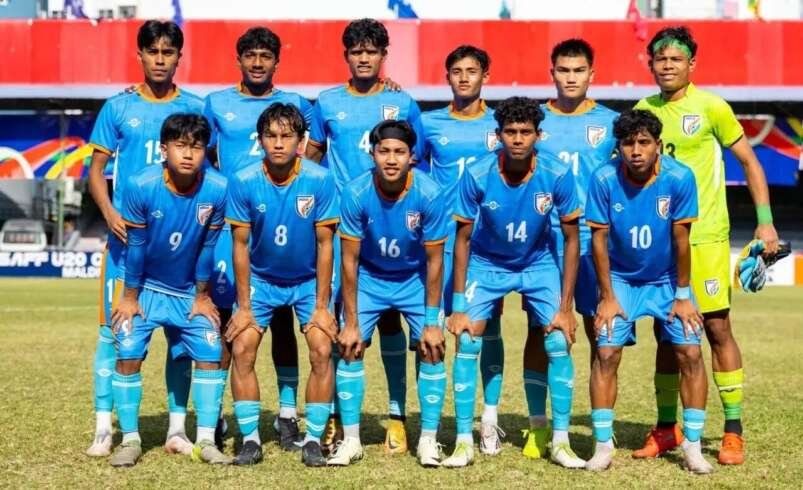

Indian football is entering an important transition period. The familiar names who carried the national team for years are gradually making room for a younger group that is more comfortable playing professional football early, facing experienced opponents and competing in demanding domestic and international environments.
The exciting part is that this generation is not limited to one or two highly publicised prospects. Players such as Mohammed Aimen, Brison Fernandes, Lalremtluanga Fanai, Noufal P.N., Suhail Ahmad Bhat and a growing group of U-20 and U-17 players are creating a much wider talent pool.
That does not mean every promising youngster will become an India regular. Football development rarely follows a straight line. Injuries, playing time, tactical fit, confidence and the quality of coaching can all change a player’s trajectory.
For supporters following Indian football, including through gold365, the more interesting question is therefore not simply, “Who is the next star?” It is: which young players have the tools to become important international footballers over the next five to ten years?

India’s Young Footballers and the Path to the Senior National Team
Mohammed Aimen and Brison Fernandes represent two different routes to the top
Mohammed Aimen is one of the most intriguing attacking prospects in the current Indian setup. The Kerala Blasters academy graduate has developed into a direct, energetic player who likes taking defenders on and carrying the ball forward.
His progress accelerated through youth and senior football. In AFC U-23 Asian Cup qualifying, he attracted attention with a brace against Brunei and subsequently received a senior India call-up. In January 2026, he and his twin brother Mohammed Azhar joined Sporting Club Delhi ahead of the club’s ISL campaign. The club described Aimen as an explosive attacking player who is comfortable in one-on-one situations and quick transitions.
That profile is valuable for India.
The national team has often needed players capable of changing the speed of an attack. Aimen’s willingness to run at defenders gives him a quality that cannot easily be taught through tactical instructions alone.
However, his next challenge is consistency.
A young winger or attacking midfielder can look spectacular for 20 minutes and then disappear for the rest of a match. The difference between a promising player and an international regular is learning how to influence games even when the obvious attacking opportunities are not available.
Brison Fernandes offers a different example.
The FC Goa midfielder emerged as one of the biggest Indian stories of the 2024–25 ISL season, winning the Emerging Player of the Season award. He scored seven goals and supplied two assists in 24 appearances, while also becoming the second-highest Indian goalscorer in the league that season behind Sunil Chhetri.
His journey is particularly useful because it shows that development does not always happen overnight.
Fernandes came through FC Goa’s youth system after joining the club’s U16 side in 2016. His first three ISL seasons produced limited playing time, but he eventually earned a major role and then received his India call-up.
That is a lesson worth remembering.
When a young player spends several seasons outside the spotlight, it does not necessarily mean development has stopped. Sometimes the most important progress happens before the player becomes famous.
Fernandes has also spoken about the need for greater consistency in his game. That self-awareness could be just as important as his goals and assists.
The midfield generation could become especially important
If India wants to compete more consistently against Asia’s stronger football nations, developing technically reliable midfielders will be crucial.
Lalremtluanga Fanai is one name worth monitoring.
The Bengaluru FC midfielder has developed through the club’s system and signed a contract extension that runs through 2027–28. His profile is interesting because he can operate in central and defensive midfield roles, giving coaches flexibility.
During the 2025–26 ISL season, Fanai contributed four assists according to available league data, including assists in wins over Jamshedpur FC and Chennaiyin FC.
For Indian football, players in this role are extremely valuable.
A midfielder does not have to score ten goals a season to be important. Someone who receives the ball under pressure, wins possession, connects defence with attack and maintains the team’s shape can influence every phase of a match.
Fanai’s development will therefore be worth watching beyond simple goal statistics.
The same principle applies to players such as Ayush Dev Chhetri and other young midfielders coming through the ISL ecosystem.
India needs depth.
One established midfielder cannot solve every tactical problem. A stronger generation means coaches can select different profiles depending on the opponent.
Noufal P.N. brings another attacking option
Noufal P.N. is another player who illustrates the changing pathway for Indian footballers.
The forward has been part of Mumbai City’s young talent pool and has been given opportunities in senior football. In the 2024–25 ISL season, he recorded an assist and created chances despite relatively limited minutes. The league has also highlighted his speed and direct approach as important characteristics.
Speed can be particularly useful against teams that defend with a high line.
Imagine India recovering possession near midfield against an opponent whose full-backs have pushed forward. A fast wide player can immediately attack the space behind them.
That transition can turn defensive recovery into an attacking opportunity within seconds.
Noufal’s challenge will be improving the other parts of his game so that opponents cannot simply prepare for his pace.
That means better decision-making, movement without the ball and final-third execution.
The U-20 and U-17 groups may contain the next wave
The most interesting part of Indian football development is that some of the players who could shape the national team in the early 2030s are still playing youth football today.
India’s 2026 AFC U-17 Asian Cup squad included players such as Dallalmuon Gangte, Diamond Singh Thokchom, Moosa Ashiq, Gunleiba Wangkheirakpam, Raj Singh Wahengbam and Washington Singh Ngangom. The official AFC squad registration shows how geographically diverse the group is, with players coming through clubs and academies across India.
That diversity matters.
Indian football’s talent pool extends well beyond the traditional football centres.
The northeastern states continue to produce technically gifted players. Goa remains an important football development region. Kerala has a strong youth culture. Punjab, Delhi, West Bengal and other parts of the country are also producing players through academies and competitive structures.
The challenge is connecting that talent to a reliable professional pathway.
Why the ISL matters to India’s next generation
The Indian Super League has become an important bridge between youth football and senior professional football.
The league itself has highlighted its role in giving young Indian players exposure alongside experienced professionals and foreign players.
That experience can be transformative.
A teenager playing youth football may have excellent technique, but professional football introduces different demands.
The game becomes faster.
Defenders are stronger.
Mistakes are punished more quickly.
Players have to understand tactical instructions and maintain concentration for an entire match.
Playing alongside experienced professionals also teaches things that are difficult to reproduce in academy training.
A young midfielder can see how a veteran scans before receiving the ball. A winger can learn how an experienced full-back positions his body. A goalkeeper can observe how professionals communicate with their defensive line.
Those small lessons accumulate.
The biggest problem is not finding talent
India has millions of young people who enjoy football.
The harder challenge is identifying the best players early enough and giving them the right environment to develop.
Coaches working with young footballers need to balance technical development with physical and tactical education.
A player should not be judged simply because he is bigger or faster at 15.
Growth happens at different rates.
The smaller teenager who understands space, passes accurately and makes good decisions may eventually become a better senior footballer than the early physical standout.
This is one reason modern scouting needs patience.
Foreign exposure could accelerate development
Another important part of the next generation’s development is international experience.
Indian youth teams and clubs increasingly need competitive exposure against stronger footballing nations.
Training abroad for two weeks can be useful, but meaningful development requires repeated high-level competition.
A young player who regularly faces technically strong opponents learns to make decisions faster.
That is one reason international youth tournaments, overseas academy partnerships and competitive club fixtures can be so valuable.
India’s football ecosystem has also started experimenting with international partnerships and development programmes. For example, German club VfB Stuttgart has worked with Sudeva Delhi on youth development, while coaches involved in the programme have identified late structured training and India’s geographical challenges as issues that need attention.
The lesson is simple: international standards cannot be learned only by watching European football on television.
Players have to experience those standards on the pitch.
What separates a prospect from a future international?
This is where fans need to be careful.
A young player producing impressive highlights does not automatically mean he will become a senior international.
When evaluating India’s next generation, look for:
- Technical quality: Can the player control and pass under pressure?
- Decision-making: Does he choose the right option quickly?
- Physical development: Can he handle senior-level intensity?
- Tactical understanding: Does he understand his role without the ball?
- Consistency: Can he perform repeatedly rather than once every few matches?
- Mental resilience: How does he respond after mistakes?
- Playing time: Is he regularly competing against experienced professionals?
These factors provide a much better indication of future potential than social-media popularity.
The biggest mistake is comparing every youngster with a legend
Indian football has seen this problem before.
A young striker scores a few goals and is immediately called the next Sunil Chhetri. A creative midfielder is compared with a former national-team star. A teenage winger is expected to transform the entire national team.
Those comparisons create unnecessary pressure.
Every player develops differently.
The objective should be to help young footballers become the best version of themselves rather than forcing them into somebody else’s career template.
For fans following gold365 andar bahar online football communities or social media discussions, this is worth remembering before judging a teenager after one good or bad match.
How supporters can follow young players intelligently
If you want to identify India’s future stars early, do not only watch international matches.
Follow several levels of the game:
- ISL matches — look for young players receiving consistent minutes.
- Youth national teams — watch U-17, U-20 and U-23 competitions.
- Domestic development leagues — these can reveal players before they become household names.
- AFC competitions — continental matches provide stronger benchmarks.
- Player development trends — look for improvement over multiple seasons.
This approach gives you a clearer picture.
For example, Brison Fernandes was not suddenly created by his breakout ISL season. His progress came after years inside FC Goa’s development structure.
Key takeaways
- Mohammed Aimen is one of India’s most exciting attacking prospects, particularly because of his pace and one-on-one ability.
- Brison Fernandes has already demonstrated that patience and consistent club development can produce a senior international.
- Lalremtluanga Fanai represents the type of versatile midfielder India needs for the future.
- Noufal P.N. offers speed and direct attacking ability that can be useful in transition.
- The U-17 and U-20 systems contain another wave of players who could become important in the next decade.
- The ISL remains a major bridge between academy football and senior professional competition.
- International exposure, quality coaching and regular competitive minutes are essential for development.
- Fans should judge young players over several seasons rather than reacting to one performance.

Frequently Asked Questions
Who are some of the most promising young Indian footballers in 2026?
Mohammed Aimen, Brison Fernandes, Lalremtluanga Fanai and Noufal P.N. are among the names worth following at senior professional level. The U-17 and U-20 teams also contain several emerging prospects who could develop into senior internationals.
Why is Mohammed Aimen considered an important prospect?
Aimen combines direct running, speed and one-on-one ability. His performances in AFC U-23 qualifying, including a brace against Brunei, helped bring him into the senior national-team picture. He joined Sporting Club Delhi in 2026 to continue his professional development.
Who is Brison Fernandes?
Brison Fernandes is an FC Goa midfielder who won the ISL Emerging Player of the Season award for 2024–25 after scoring seven goals and providing two assists in 24 appearances. He subsequently earned a senior India call-up.
Why is the ISL important for young Indian players?
The ISL provides young footballers with exposure to senior professional football, experienced teammates and high-level coaching. It has increasingly functioned as a platform through which Indian youth players can progress toward established professional and international roles.
Which age groups should Indian football fans watch?
The U-17, U-20 and U-23 teams are particularly important because they provide an early view of players who could enter the senior national-team setup later. India’s 2026 U-17 squad, for example, included several players already attached to established Indian clubs and academies.
Can India produce a generation of players capable of competing more strongly in Asia?
Yes, but talent alone will not be enough. India needs players to receive consistent senior minutes, better youth coaching, international exposure, appropriate physical development and a clear pathway from grassroots football to professional competition.
Where can fans follow emerging Indian football talent?
The ISL, AFC competitions, Indian youth national teams and club academies are useful places to track emerging players. Communities such as gold365 VIP can add discussion around football, but official league, club and federation sources are better for confirming selections, statistics and results.
Conclusion
The future of Indian football will not be built around one player. It will depend on whether the country can turn a wider pool of talented youngsters into technically strong, tactically intelligent and mentally resilient professionals.
Aimen’s attacking directness, Fernandes’ rise through FC Goa, Fanai’s midfield development and the emergence of players through India’s youth teams all point toward a deeper talent pool.
The next step is making sure these players receive enough meaningful football to grow. If India can create that pathway consistently, the most exciting development may not be the arrival of one superstar, but the emergence of an entire generation capable of raising the standard of Indian football.