

There’s a version of this decision that gets made accidentally. A company starts shipping products out of a spare room, then a rented unit, then a slightly bigger rented unit, each step following naturally from the last without anyone sitting down to ask whether owning and running warehouse space is actually the right call at this stage. By the time someone does ask, the business has often already outgrown the answer that would have served it two years earlier.
This is less a single decision than a threshold that gets crossed quietly. The goal here isn’t to prescribe a universal answer — there isn’t one — but to lay out the signals that indicate which side of that threshold a business is actually on.
Start with what “too early” looks like
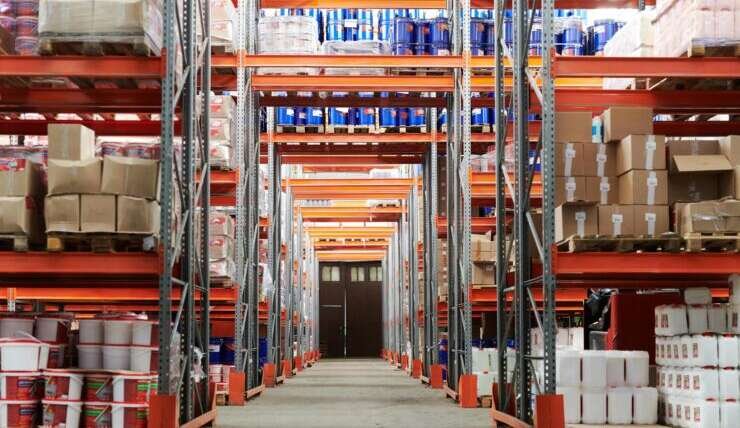
Running warehousing in-house before it makes sense usually shows up as fixed costs that don’t flex with demand. A company leases a facility sized for next year’s projected volume, not this year’s actual volume, and spends the gap between the two paying for empty racking. Staff get hired to a headcount that matches busy-season needs, then sit underutilized for the rest of the year.
The tell here is usually financial before it’s operational: warehousing cost per order shipped is high and doesn’t improve much as volume grows, because the fixed cost base is too large relative to current throughput. A business in this position is paying for infrastructure sized for where it hopes to be, not where it is — a reasonable bet sometimes, but one that ties up capital that could otherwise fund growth directly.
There’s also a talent problem that’s easy to underestimate. Running a warehouse well requires specific expertise — inventory systems, labor scheduling, carrier relationships, exception handling — that a company building its first internal logistics team is, by definition, building from scratch. Early-stage in-house warehousing often means paying full infrastructure cost while still climbing the operational learning curve that an established operator already has behind them.
Now the other side: what “too late” looks like
The opposite failure is less visible because it doesn’t show up as a cost line — it shows up as friction that gets absorbed into “how things are” until it’s genuinely limiting growth. A business outgrows in-house warehousing when its logistics needs start requiring specialization it doesn’t have: multi-region distribution, complex returns handling, seasonal demand swings that require flexible labor and space at short notice.
The clearest signal is when logistics problems start consuming leadership attention disproportionate to their strategic importance. If senior people are spending real time on carrier negotiations, warehouse staffing, or peak-season capacity planning, that’s often a sign the business has grown past the point where handling this in-house is the best use of internal resources — even if it was, at an earlier stage.
A second signal is geographic. A business that starts shipping into new regions or states often discovers that its single-warehouse model creates delivery times and costs that a distributed network would solve — but building that network internally means new leases, new hires, and new systems in each location, all before knowing for certain that the expansion will succeed at the volume that justifies it.
The decision framework: what actually determines which side you’re on
Rather than a fixed volume threshold — which varies too much by industry and product type to be useful as a rule — three questions tend to be more reliable indicators.
Is warehousing cost per unit improving or flat as volume grows? If cost per order shipped is dropping as volume increases, the current setup — in-house or outsourced — is likely scaling well. If it’s flat or rising, something structural is working against the business, whether that’s excess fixed capacity or inefficient outsourced pricing.
Does demand vary enough that fixed infrastructure is a liability? Businesses with sharp seasonal peaks — several times normal volume during a festive period, say — often struggle with in-house models because owned infrastructure has to be sized for peak, then sits underused the rest of the year. A model that can flex capacity up and down tends to fit this pattern better than fixed ownership.
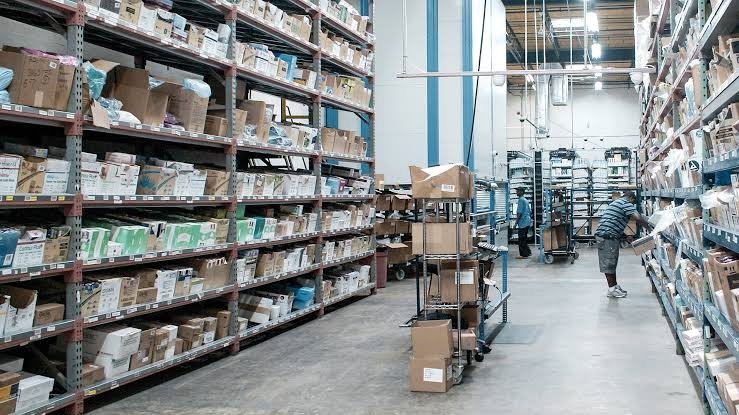
Is the complexity of the operation outpacing internal expertise? Multi-region distribution, cold-chain requirements, high-return-rate categories, or SKU counts that have grown past what current systems can track cleanly — each of these raises the operational bar in a way that either requires significant internal investment to match, or is more efficiently handled by a partner who’s already built that capability across other clients.
Where 3PL fits into the answer
For businesses on either side of the threshold — not yet ready to justify owned infrastructure, or past the point where in-house complexity is manageable — third-party logistics tends to solve for the same underlying issue: matching warehousing capability to actual current need rather than a fixed prediction of future need. 3pl warehousing and distribution shifts fixed costs into variable ones, gives access to existing operational expertise without a multi-year internal build-out, and — for businesses expanding into new regions — offers distributed warehouse footprints without the capital commitment of leasing and staffing each one directly.
This isn’t a claim that outsourcing is always right. Some businesses, particularly those where warehousing is close to the core product experience or where volume is large and stable enough to make owned infrastructure genuinely cheaper at scale, are better served running it internally. The point is that the decision deserves the same rigor as any other significant capital or operational choice — not the default that emerges from simply not revisiting an earlier arrangement.
AWL India works with businesses on both sides of this threshold — those testing whether third-party warehousing fits their current stage, and those that have already outgrown in-house infrastructure and need a distribution network built faster than they could build one themselves. More on their approach is available on their 3pl warehousing and distribution page.
The question worth asking before the decision gets made by default
Most companies don’t consciously choose to run warehousing too early or too late — they just keep doing what they did last quarter until volume, geography, or complexity forces a reckoning. The businesses that get this right tend to be the ones that treat it as a decision to revisit periodically, checked against the three questions above, rather than a choice made once at the start and left alone until something breaks.