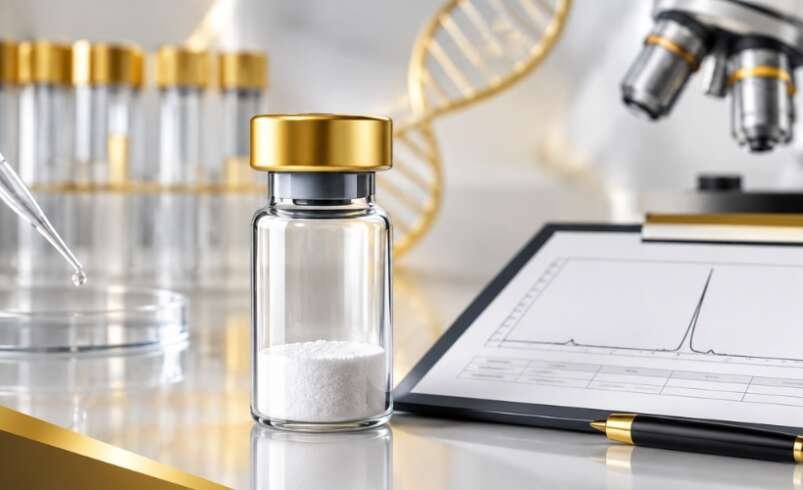

When reviewing research peptides, purity is one of the most important details to understand. It provides information about the composition of a tested sample and helps readers interpret laboratory results. One place where this information appears is a Certificate of Analysis (CoA).
A Semax CoA contains important details about laboratory testing, including the reported purity percentage, compound identification, batch information, and testing methods. Understanding these details can help readers make sense of the analytical results and avoid common misunderstandings.
However, purity percentage does not tell the whole story about a product. It is important to understand how laboratories calculate this figure and what other information should be considered when reviewing a report.
This article explains what purity percentage means, how it is measured, why it matters, and what to look for when reading a Semax Certificate of Analysis.
Understanding a Semax Certificate of Analysis
A Certificate of Analysis is a laboratory document that provides the results of testing performed on a particular sample or batch. It helps readers understand the characteristics of the tested material and the methods used during analysis.
A Semax Coa may include several important details, such as:
- Product or compound name
- Batch or lot number
- Sample identification
- Laboratory testing date
- Analytical testing methods
- Reported purity percentage
- Molecular identification results
- Laboratory information
These details help establish what was tested and what the laboratory found.
It is important to remember that a CoA generally relates to a specific batch. Results from one batch should not automatically be applied to another because different batches may produce different analytical findings.
For this reason, reviewing the complete document is more useful than looking at the purity percentage alone.
What Does Purity Percentage Mean?
Purity percentage indicates the proportion of the detected material attributed to the target compound under a particular testing method.
For example, if a laboratory report shows 98% purity, it generally means that the target compound accounts for approximately 98% of the measured analytical response under the stated testing conditions.
The remaining percentage may represent other detected substances, impurities, related compounds, or unidentified components.
However, there is an important distinction between analytical purity and the actual weight percentage of a sample.
For example, an HPLC report showing 98% purity may refer to the target compound’s share of the total detected chromatographic peak area. It does not necessarily mean that 98% of the sample’s total weight consists of the target compound.
This distinction is important when interpreting a Semax CoA because different testing methods provide different types of information.
How Is Purity Measured in a Laboratory?
Laboratories use specialised analytical methods to examine samples and identify their chemical components. The methods selected depend on the compound being tested and the information required.
High-Performance Liquid Chromatography and Mass Spectrometry are two commonly used techniques in peptide analysis.
High-Performance Liquid Chromatography (HPLC)
High-Performance Liquid Chromatography, commonly known as HPLC, is used to separate different components within a sample.
During testing, the sample passes through a specialised column under controlled conditions. Different components interact with the column differently, causing them to separate as they move through the system.
A detector records these components as peaks in a chromatogram. The laboratory can then examine the target compound’s peak and compare its area with the total integrated peak area.
This calculation is commonly used to report chromatographic purity as a percentage.
When reviewing a Semax CoA, it is useful to check whether the reported purity comes from HPLC testing and how the laboratory calculated the result.
Mass Spectrometry (MS)
Mass Spectrometry is another analytical technique used in peptide testing. It examines the mass-to-charge ratio of ions to provide information about the molecular characteristics of a compound.
For peptide analysis, mass spectrometry can help determine whether the detected material has a molecular mass consistent with the expected compound.
While HPLC provides information about the separation of sample components, mass spectrometry offers additional evidence about molecular identity.
Using these methods together can provide a better understanding of a tested sample. However, each technique has its own limitations, so the results should be interpreted according to the laboratory’s testing procedures.
Why Is Purity Percentage Important?
Purity percentage is an important part of laboratory documentation because it provides information about the composition of a tested sample.
For research purposes, this information can help readers understand the analytical characteristics of a material and assess whether the reported results meet particular research requirements.
Understanding Sample Composition
A purity result helps show how much of the measured analytical response is associated with the target compound.
If additional peaks appear in an HPLC chromatogram, they may indicate the presence of other components. Reviewing these peaks can provide more information about the sample and help identify substances that may require further investigation.
Supporting Quality Assessment
Purity is one factor considered when assessing laboratory materials. It becomes more useful when reviewed alongside compound identification, testing methods, and supporting documentation.
However, a high purity percentage does not automatically confirm that every quality requirement has been met.
Comparing Different Batches
Different production batches may have different analytical results. Batch-specific CoAs make it possible to review the reported findings for individual samples.
When comparing results, it is important to consider whether the same or similar testing methods were used. Differences in analytical procedures can affect how purity percentages are calculated and reported.
Improving Documentation Transparency
Clear laboratory documentation helps readers understand how a sample was tested and what results were obtained.
A detailed Semax CoA should provide enough information to identify the tested batch, understand the reported findings, and review the analytical methods used.
Does a Higher Purity Percentage Always Mean Better Quality?
A common misunderstanding is that a higher purity percentage automatically means a better product.
Although purity is an important measurement, it should not be treated as the only indicator of quality. A result of 99% may appear better than 97%, but the difference does not provide a complete picture of the sample.
Other factors also need to be considered.
Testing accuracy: The reliability of a purity result depends on the analytical method, laboratory equipment, calibration, and testing procedures.
Compound identification: A purity percentage alone does not confirm the identity of a substance. Additional testing may be needed to support its identification.
Impurity information: The types of impurities present can be important. Even a high purity result may require further investigation if certain impurities are relevant to the research.
Sample condition: Storage and handling conditions can affect the stability of laboratory materials. A CoA describes the sample tested at the time of analysis and does not necessarily confirm its condition at a later date.
Testing methods: Different laboratories may use different procedures and reporting standards. Their results should be compared carefully rather than assuming that every purity percentage has the same meaning.
Considering these factors provides a more balanced understanding of laboratory results.
What Other Details Should You Check in a Semax CoA?
Purity is an important part of a Certificate of Analysis, but other details can help readers understand the reliability and relevance of the reported results.
Batch or Lot Number
The batch number connects the CoA to a particular production batch. It is important to check whether the number on the report matches the relevant product documentation.
If the numbers do not match, it may be difficult to confirm whether the report relates to the sample being reviewed.
Testing Date
The testing date shows when the laboratory performed the analysis. It helps establish when the reported results were obtained.
This information is particularly useful when reviewing materials that may be affected by storage conditions or changes over time.
Analytical Testing Method
The report should identify the methods used to examine the sample.
For example, HPLC may be used to assess chromatographic purity, while mass spectrometry can provide supporting information about molecular identity.
Understanding these methods helps readers interpret the results more accurately.
Chromatogram and Supporting Results
When available, chromatograms provide additional information about the HPLC analysis. They display the detected peaks and their relative areas.
Reviewing this information can help readers understand how the reported purity percentage was calculated and whether other detectable components were present.
Laboratory Information
A clear report should identify the laboratory responsible for testing. It may include the laboratory name, report reference, testing date, and authorised approval.
These details help improve traceability and make the document easier to review.
Common Misunderstandings About Purity Percentage
There are several mistakes people commonly make when interpreting purity results.
One common mistake is assuming that 99% purity means exactly 99% of the sample’s total weight consists of the target compound. This is not necessarily correct, especially when the result comes from HPLC area normalisation.
Another misunderstanding is treating purity and identity as the same measurement. Purity describes the relative analytical response associated with the target compound, while identity testing examines whether the material matches the expected compound.
Some readers also assume that a high purity percentage confirms the complete absence of impurities. In reality, certain substances may not be detected by the selected method or may be present below its detection limits.
It is also important to avoid directly comparing results from different analytical methods without understanding how each percentage was calculated.
Keeping these points in mind makes it easier to interpret a Semax CoA without drawing conclusions from a single number.
How to Read a Semax CoA More Carefully
A simple and organised approach can make reviewing a Certificate of Analysis easier.
Start by checking the product name and batch number. Make sure the document relates to the sample being reviewed.
Next, look at the reported purity percentage and identify the analytical method used to obtain the result. If HPLC was used, check whether the percentage refers to chromatographic peak area rather than the total sample weight.
Then, review any supporting information, including mass spectrometry results, chromatograms, and laboratory details. These sections can provide additional context about the reported findings.
Finally, check the testing date and any available information about the analytical procedure. If important details are missing or unclear, the laboratory or supplier should be able to explain the documentation.
Taking these steps helps readers understand laboratory results more accurately and avoid relying on the purity figure alone.
Final Thoughts
Purity percentage is an important part of understanding the analytical results presented in a Semax CoA. It provides information about the target compound’s relative presence in a tested sample under specific laboratory conditions. However, it does not independently confirm the complete composition, identity, or overall quality of a material.
For a more complete assessment, readers should consider the purity result alongside HPLC data, mass spectrometry findings, batch details, testing dates, and laboratory information. Understanding these elements makes it easier to interpret analytical reports and assess the information they provide.
When reviewing research peptides and laboratory compounds, clear documentation and transparent testing information are important considerations. Gold Label Peptides supplies research peptides and laboratory compounds across the UK, with product information, secure ordering, prompt delivery, and professional customer support for scientific and laboratory research requirements.
Always interpret analytical results within the scope of the testing method and remember that a laboratory report describes the sample tested rather than guaranteeing every characteristic of a product.