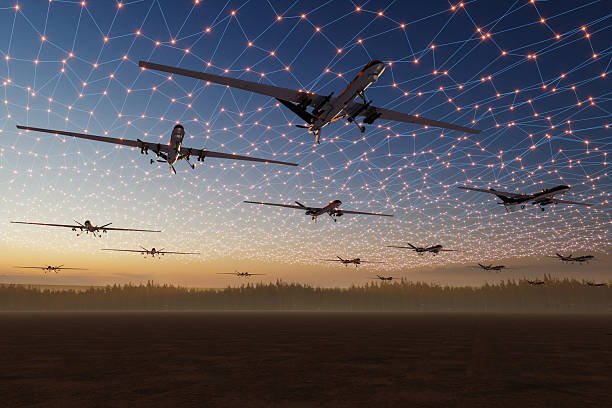

The growing use of unmanned aerial vehicles (UAVs) across commercial and industrial sectors is changing how organizations conduct monitoring, inspection, surveillance, and transportation activities. Among the emerging developments, Beyond Visual Line of Sight (BVLOS) technology is gaining attention because it allows drones to operate beyond the direct visual range of their remote pilots. Combined with autonomous navigation, advanced sensors, and communication systems, BVLOS drones are creating new possibilities for large-scale aerial operations.
The Global Autonomous BVLOS Drones Market is witnessing increased adoption across agriculture, energy, construction, logistics, and government applications. According to the Autonomous BVLOS Drones Market analysis published by Markntel Advisor, the industry is benefiting from technological advancements in remote sensing, Automatic Dependent Surveillance-Broadcast (ADS-B) transponders, artificial intelligence, and machine learning. These developments are improving operational efficiency while expanding the potential applications of autonomous aerial systems.
Understanding Autonomous BVLOS Drone Technology
BVLOS drones are unmanned aircraft capable of performing flights without requiring the remote operator to maintain continuous direct visual contact with the aircraft. These systems rely on advanced navigation technologies, communication networks, sensors, and automated flight-control mechanisms to complete assigned missions.
Autonomous capabilities allow drones to follow predefined routes, collect information, identify obstacles, and transmit operational data to ground-based control systems. Depending on their design and intended application, these UAVs include fixed-wing, rotor-based, and hybrid configurations. Their operational range and payload capabilities influence their suitability for different commercial and industrial requirements.
Technological Advancements Supporting Market Adoption
The integration of artificial intelligence and machine learning is becoming an important development in autonomous drone operations. These technologies help process information collected through onboard sensors, support navigation decisions, and improve the identification of objects and environmental conditions. Advanced automation also reduces the need for continuous manual intervention during certain flight activities.
Remote sensing technology is another important component of BVLOS operations. High-resolution cameras, multispectral sensors, and other monitoring equipment enable drones to collect information across extensive geographical areas. Additionally, ADS-B transponders support aircraft identification and tracking, helping improve situational awareness and coordination with manned aviation.
According to the Federal Aviation Administration’s BVLOS regulatory framework, proposed operational requirements address aircraft separation, operational authorizations, security, and responsibilities. These regulatory developments demonstrate the importance of establishing reliable safety mechanisms alongside technological innovation.
Expanding Applications Across Commercial Industries
Agriculture and agribusiness represent important application areas for autonomous BVLOS drones. These systems can support crop monitoring, soil assessment, pest identification, and agricultural resource management across extensive farming areas. Multispectral imaging and remote sensing capabilities help agricultural operators collect detailed information about crop conditions, supporting more informed decisions regarding irrigation, fertilization, and field management.
The energy and utilities sector is another significant area of adoption. Drones can inspect pipelines, power transmission infrastructure, renewable energy installations, and other geographically dispersed assets. BVLOS capabilities allow operators to cover larger inspection areas without depending entirely on ground-based teams, potentially improving inspection efficiency and reducing exposure to difficult working environments.
Construction, engineering, and mining companies are also exploring autonomous aerial systems for surveying, mapping, progress monitoring, and site inspection. The collected aerial information can support project planning, infrastructure assessment, and operational monitoring.
Furthermore, logistics and transportation companies are evaluating BVLOS technology for delivery and transportation activities. Autonomous aerial systems may support the movement of lightweight packages and essential supplies, particularly in locations where conventional transportation infrastructure presents accessibility challenges.
Regulatory Developments and Operational Safety
Regulatory approval remains an important consideration for the wider deployment of BVLOS drones. Operating beyond visual line of sight introduces additional requirements involving aircraft detection, communication reliability, airspace coordination, emergency procedures, and operational risk management.
Different countries follow distinct regulatory approaches depending on their aviation infrastructure and safety requirements. The European Union Aviation Safety Agency (EASA), through its unmanned aircraft operational regulations, provides a regulatory framework that categorizes drone operations according to associated risks and operational requirements.
In the United States, the Federal Aviation Administration has also been developing regulatory provisions to facilitate routine BVLOS activities while maintaining aviation safety. Such regulatory developments are relevant to commercial operators seeking to expand drone operations across multiple locations.
Challenges Affecting Wider Deployment
Despite technological progress, autonomous BVLOS drone operations face several challenges. Communication interruptions, navigation inaccuracies, adverse weather conditions, cybersecurity vulnerabilities, and battery limitations can affect operational reliability. Maintaining dependable connectivity between drones and ground-control systems is particularly important during extended-distance missions.
Regulatory compliance and infrastructure requirements can also increase deployment complexity. Operators may need specialized equipment, trained personnel, operational approvals, and appropriate risk-management procedures before conducting commercial BVLOS activities. Addressing these requirements is essential for maintaining safe and consistent operations.
Future Outlook for Autonomous BVLOS Drones
The development of autonomous navigation, remote sensing, communication systems, and drone traffic management technologies is shaping the industry’s evolution. Applications across agriculture, infrastructure inspection, energy, logistics, and public-sector operations indicate the growing relevance of BVLOS capabilities.
As regulatory frameworks mature and supporting technologies improve, autonomous BVLOS drones may become increasingly integrated into commercial and industrial workflows. However, the pace of adoption will depend on operational reliability, safety standards, infrastructure readiness, and the ability of organizations to demonstrate practical benefits across different applications.