
BPC-157 and thymosin beta-4 fragments come up often in peptide research conversations, and they are easy to mix up. They are different molecules with different origins, and the published evidence for each is narrower than many online summaries suggest. This article lays out what the literature covers, where it stops, and what a careful reader should keep in mind.
What BPC-157 Is
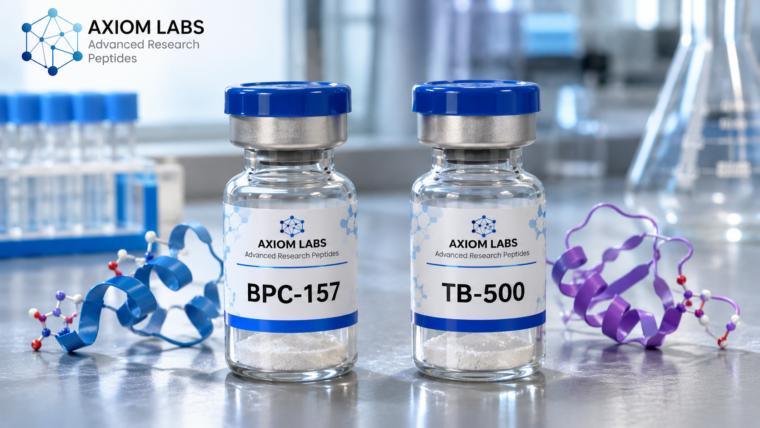
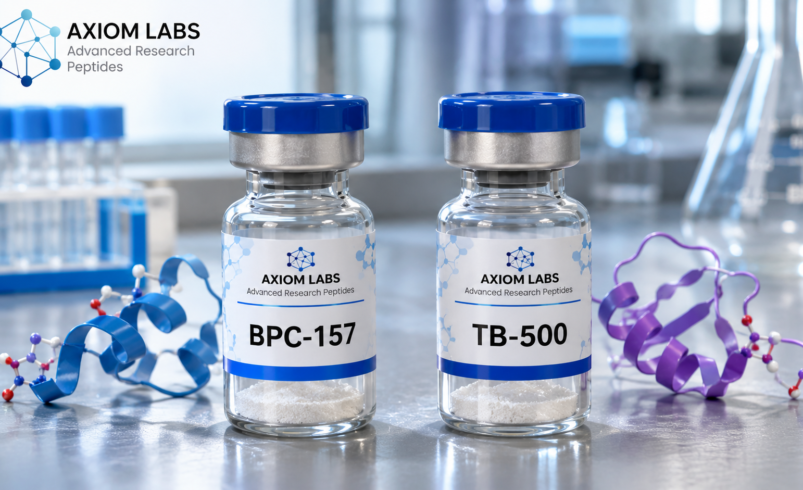
BPC-157 is a synthetic peptide made of 15 amino acids. Its name stands for “body protection compound”, and its sequence was derived from a protein found in human gastric juice. In published work, it is studied mainly in laboratory and animal models, where researchers have looked at tissue and cell responses in areas such as the gut lining, tendons and blood vessels.
What TB-500 And Thymosin Beta-4 Are
Thymosin beta-4 is a naturally occurring peptide of 43 amino acids, found widely in the body and linked in research to actin regulation inside cells. TB-500 is the name commonly given to a shorter synthetic fragment connected to the active region of thymosin beta-4. Because “TB-500” is a trade-style label, you will see it used loosely, and the exact compound sold under that name can vary between sources. That is one reason documentation matters.
Why People Compare Them
Searches for BPC 157 And TB 500 tend to come from readers trying to understand how the two differ in origin, structure and research focus. A clear side-by-side helps, and the short version is this: BPC-157 is a gastric-derived sequence studied for local tissue models, while thymosin beta-4 fragments are tied to a broader cell-movement and repair literature. They are discussed together because they appear in the same research circles, not because the evidence shows they work the same way.
What The Evidence Actually Looks Like
Most of what has been published on both peptides comes from cell cultures and animal studies. Human clinical data is limited. This matters for anyone reading headlines, because results in a rodent model do not automatically carry over to people.
A few points worth keeping in mind:
- Study design varies. Doses, routes and models differ widely, which makes comparison between papers difficult.
- Sample sizes are often small. Many studies are from a limited number of research groups.
- Replication is thin. Independent confirmation is a key test of any finding, and for these peptides it is still developing.
- Regulatory status is restricted. To our knowledge, neither compound is approved as a medicine in the UK, and both appear on the World Anti-Doping Agency’s prohibited list for sport.
None of this makes the research uninteresting. It simply means the right framing is “under investigation”, not “proven”.
Sourcing Questions Researchers Should Ask
Because these are research compounds, the quality of the material shapes the quality of the work. Before choosing a supplier, it helps to check:
- Is there a batch-specific certificate of analysis? It should match the batch number on the vial.
- How was purity measured? HPLC and mass spectrometry are the usual methods.
- Is the compound identified clearly? Look for the full peptide name and sequence details, especially for fragments sold under short names.
- Are storage and handling instructions given? Lyophilised peptides are sensitive to heat and moisture.
- Is the language research-only? A supplier that makes personal-use claims is a red flag.
Reading Peptide Research Critically
A few habits make the literature easier to navigate:
- Check whether a study used cells, animals or people.
- Look at who funded and ran it, and whether others have repeated it.
- Separate what the authors measured from what a website claims.
- Be cautious about summaries that skip the limitations section.
Final Thoughts
BPC-157 and thymosin beta-4 fragments are active topics in early-stage research, but the evidence base is mostly preclinical and the regulatory picture is restrictive. Readers get the most value by treating them as research subjects, reading the original papers where possible, and holding suppliers to clear documentation standards. If you are comparing sources or want to see how one UK supplier presents its research range, checking batch documentation first is the sensible place to start.