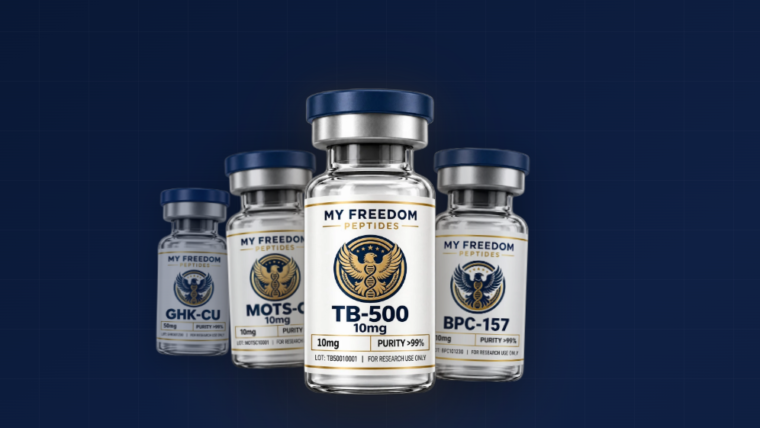
Purity is an important consideration when evaluating materials for laboratory research. People searching for verified purity peptides may want to understand whether a supplier’s purity claims are supported by analytical testing. Reviewing the testing method, batch information, and accompanying documentation can help researchers distinguish measurable results from general marketing statements.
What Does Peptide Purity Mean?
Peptides are molecules composed of amino acids arranged in a particular sequence. During production, a sample may contain the intended peptide alongside other components, including related peptide sequences, degradation products, or residual materials.
Purity describes the relative amount of the target compound compared with other components detected under a particular analytical method. However, the reported percentage depends on the method and the way the result is calculated.
For this reason, purity figures should not be interpreted without understanding the underlying analytical procedure. A high percentage alone does not answer every question about a material’s composition or suitability for research.
How Is Purity Evaluated?
High-performance liquid chromatography, commonly known as HPLC, is one technique used to examine the composition of peptide samples. It separates components according to their interactions with a chromatographic system, allowing analysts to examine the resulting signals.
Mass spectrometry is another technique that can provide information about molecular mass and help support compound identification.
These methods offer complementary information, but their results are not interchangeable. A chromatographic purity percentage does not automatically establish the exact mass of the target peptide present in a container. Likewise, a result consistent with the expected molecular mass does not necessarily demonstrate that a sample contains no impurities.
The appropriate interpretation depends on the method, the sample, and the analytical question.
Why Batch-Specific Reports Matter
Testing results should be connected to the material they describe. A batch-specific report generally provides more useful traceability than a generic document that does not identify the tested lot.
Researchers should compare the product label with the batch number stated in the analytical report. They should also review the testing date, laboratory identity, methods used, and reported results.
If any details are missing or inconsistent, clarification may be necessary before the information can be relied upon.
What Does Independent Verification Add?
Testing performed by an independent laboratory may provide additional evidence about a material’s reported characteristics. However, the phrase “independently verified” should be supported by a clear report.
Researchers should determine which laboratory performed the analysis, what material was tested, and which properties were examined. They should also consider whether the laboratory used suitable methods for the questions being investigated.
Independent testing does not automatically confirm sterility, safety, regulatory approval, or effectiveness. Each of these is a separate consideration.
Evaluating Purity Claims
When reviewing a supplier’s claims, researchers should look beyond the largest percentage displayed on a product page. Useful questions include whether the result is batch-specific, which analytical method was used, and whether the report explains the scope and limitations of the result.
Other relevant considerations include product identity, storage requirements, packaging, and documentation consistency.
Transparent reporting helps researchers understand what is established by the evidence and what remains uncertain.
Responsible Laboratory Practices
Materials used in scientific experiments should be handled according to appropriate laboratory procedures. Researchers should follow relevant safety documentation, institutional requirements, and approved protocols.
Research-grade or high-purity labeling does not establish that a peptide is suitable for administration to humans or animals. Analytical results should not be used as a substitute for appropriate safety and regulatory evaluation.
Conclusion
Verified purity claims are most useful when supported by relevant analytical methods, traceable batch information, and clear documentation. Researchers should interpret purity results within the limitations of the testing performed and assess other quality characteristics separately. A careful review of evidence supports more transparent material selection and better scientific recordkeeping.